
Do you deliver gravel to Arnold, MO?
Yes. J1S delivers crusher run and #57 stone to Arnold from its Festus yard, about 25 to 30 minutes away by US-67 and I-55. Delivery is by the full 14-cubic-yard load.
What gravel should I order?
| Layer | Order | Why |
|---|---|---|
| Base | Crusher run (#411) | The fines pack it into a solid layer that keeps the drive from sinking into clay |
| Surface | Crusher run or #57 stone | Crusher run costs less and holds best; #57 looks cleaner and drains faster but shifts more under turning tires |
Skip pea gravel. Round stone rolls under tires and, on Arnold's clay with Missouri freeze-thaw every winter, never stays put. Angular crushed stone locks together. See best gravel for driveways in Missouri, what is crusher run, or everything on the materials page.
How much gravel do I need?
A 60 by 12 foot drive at 4 inches takes about 12 tons of crusher run. Add 20 percent for a properly compacted base layer. A new build with both base and surface needs roughly double.
| Driveway | Size | Cubic yards | Tons |
|---|---|---|---|
| Short suburban | 40 x 12 ft | 5.9 | 8.0 |
| Standard | 60 x 12 ft | 8.9 | 12.0 |
| Long or double-wide | 80 x 16 ft | 15.8 | 21.3 |
Cubic yards = length (ft) x width (ft) x depth (in) / 324. Tons = cubic yards x 1.35.
Example: 60 x 12 x 4 / 324 = about 8.9 cubic yards, x 1.35 = about 12 tons.
The table is for 4 inches of crusher run, a surface refresh or modest single-layer drive. When you are between two numbers, round up. For two-layer builds, use the driveway gravel tonnage calculator.
How does delivery work?
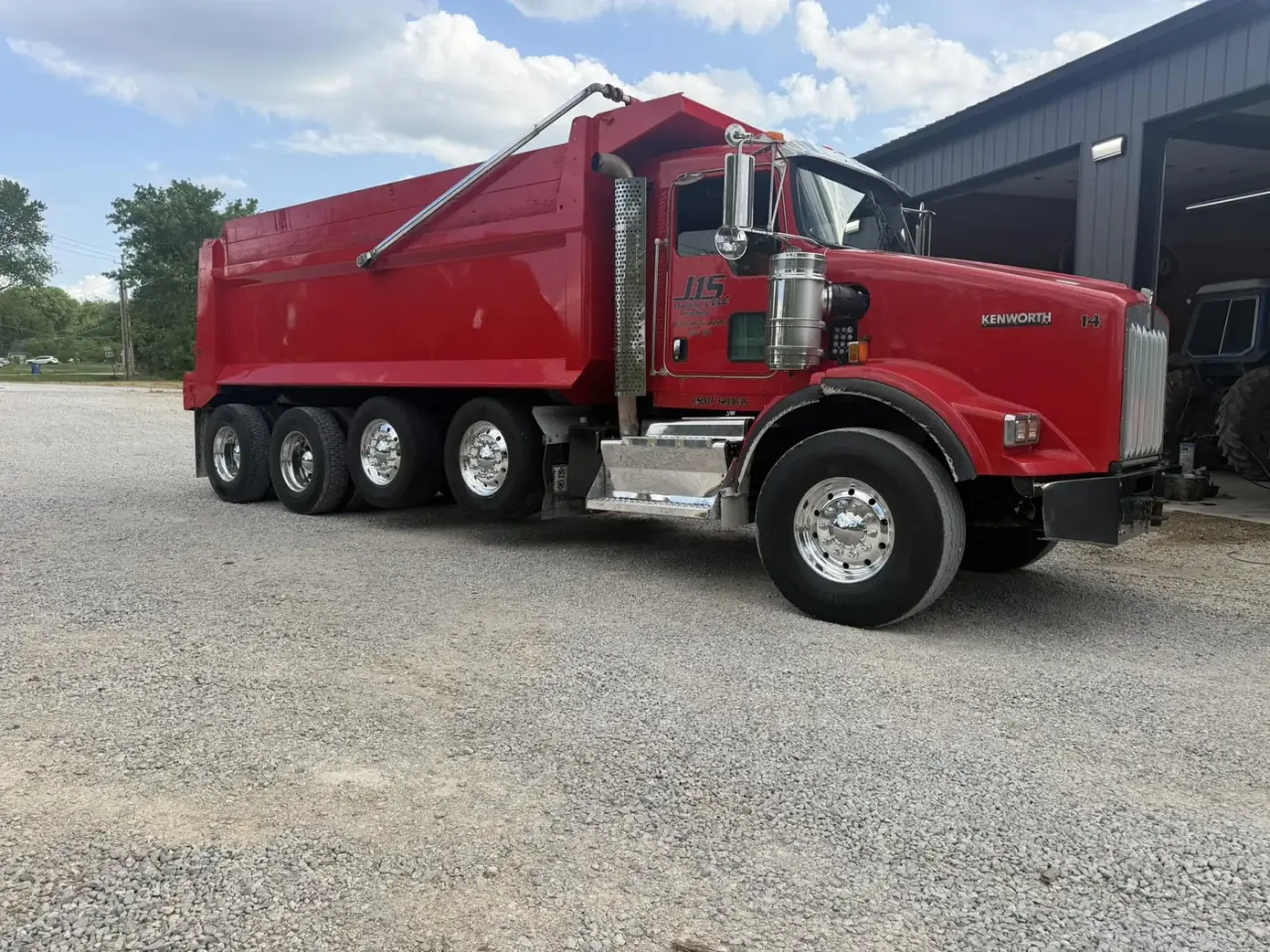
J1S quad-axle dump trucks carry 14 cubic yards per load, roughly 18 to 19 tons of crusher run depending on moisture. Arnold deliveries are routine same-week work. If you need less than a full load, you still get a full truck; the extra usually goes to a thicker base or low spots. If that is more than your lot can use, tell us before you order. Drives that need more than one load get multiple trips, base first.
Can the truck reach my drive?
Many Arnold lots have mature trees, tight setbacks, and little room to turn. Walk the driver's route before delivery day.
- Overhead: a raised dump bed reaches 18-plus feet. Trim or flag low branches and watch for service lines over the drive.
- Turnaround: if the truck cannot turn around, it backs in or out. Plan the approach so it does not sit blocking the street.
- Dump spot: pick firm, flat ground near the work. A soft lawn or steep grade is how a loaded truck gets stuck or leaves ruts.
Why the base matters on clay
Arnold sits on expansive clay, soft when wet and shrinking when dry. Gravel dumped straight on it sinks and ruts. A compacted crusher run base spreads the load, and on raw clay a layer of geotextile fabric under the base adds years of life. Compact in lifts: spread a layer, compact it, then add the next. The full driveway guide covers the compaction math.
What drives the price?
The material, the number of loads, and the distance from Festus. Arnold's short haul keeps delivery reasonable. Crusher run is the cheapest per ton; #57 costs a little more because it is washed. The bigger swing is one load versus several, since each load is its own trip. Send your dimensions and what you are building, and we will confirm the load count and quote it. More on the Arnold service-area page.
Common questions
What gravel is best for an Arnold driveway?
Crusher run (#411) for the base layer, and either crusher run or #57 stone for the surface. Arnold sits on expansive clay, and Missouri's freeze-thaw cycle works a driveway hard every winter. Angular crushed stone compacts and locks in place, while rounded pea gravel rolls and migrates, so avoid pea gravel for any driveway with regular traffic.
How much does a load of gravel cover?
A J1S quad-axle load is 14 cubic yards, about 18 to 19 tons of crusher run. At a 4-inch depth that covers roughly 1,100 to 1,150 square feet, or a driveway around 90 feet long by 12 feet wide. A deeper base covers less.
Can I get less than a full truckload?
Delivery is by the full 14-yard load. If your driveway needs less, you still receive a full truck, and the extra usually goes toward a thicker base or low spots. If a full load is more than your lot can use, contact us before ordering.
Sources
- South Dakota LTAP for the Federal Highway Administration, Gravel Roads: Maintenance and Design Manual: crushed stone interlocks and resists movement under loads, while rounded stone shifts and moves (Section III, page 40; Appendix B, page B2), and clean base material with few fines does not bind into a crust on a gravel surface (page 39).
- Missouri Department of Natural Resources, Limestone (PUB2902): Missouri limestone is crushed and screened into aggregate used for road surfacing and foundation support.