
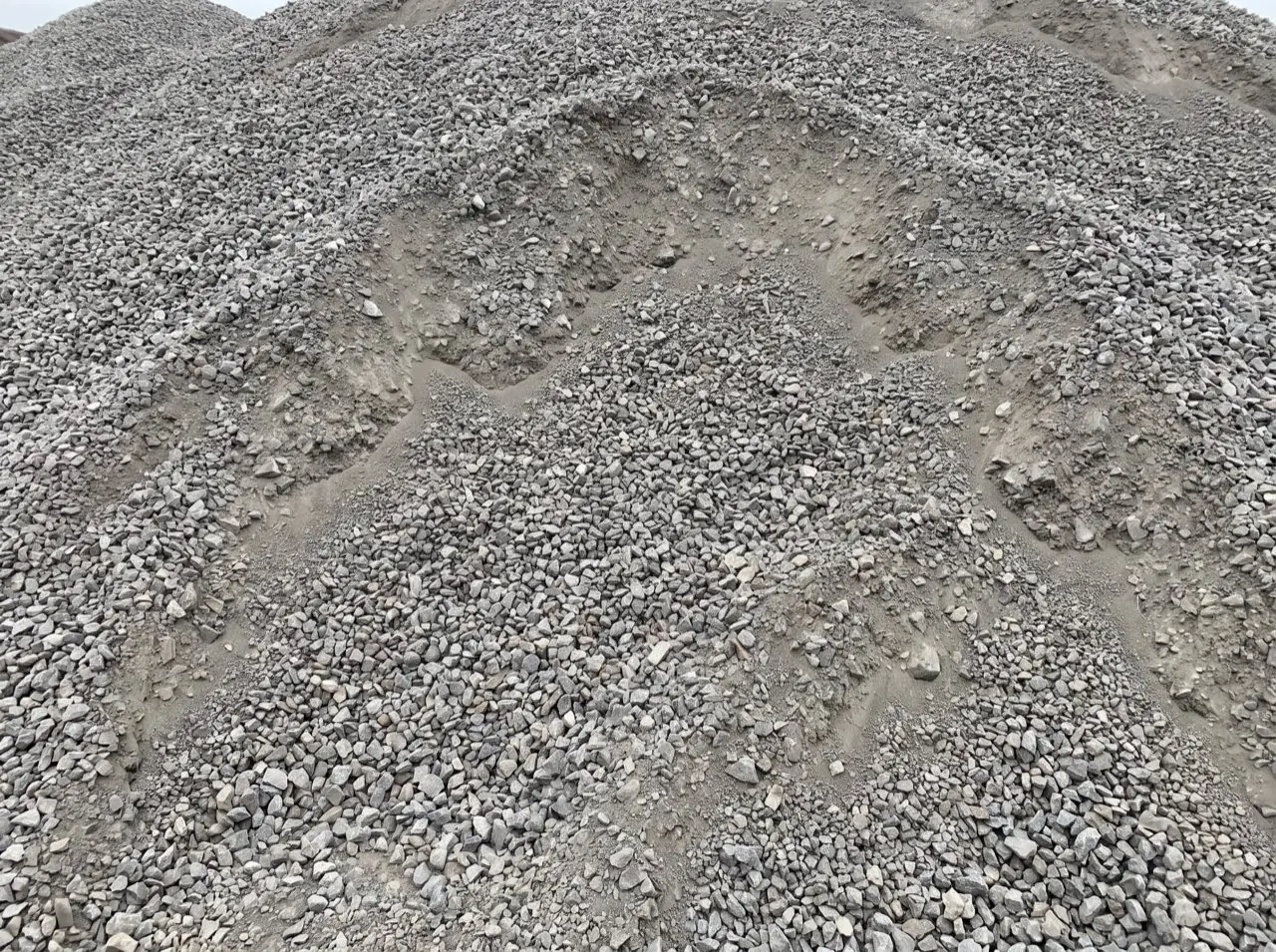
What is crusher run?
Crusher run is crushed stone that comes off the crusher with its fines left in. J1S stocks a ¾-inch-minus blend: angular stone from ¾ inch down to stone dust. The fines fill the gaps between the larger pieces, so the layer compacts into a dense, firm base. It is used under driveways, parking areas, equipment pads, and access roads. It is also called crush and run or crusher base.
Crusher run vs other stone
| Material | What it is | Choose it for |
|---|---|---|
| Crusher run | Angular stone blended with fines | A compacted base |
| #57 clean limestone | Coarse stone with most fines removed | Drainage or a clean-stone layer |
| Limestone screenings | Much finer chips and dust | A compacted path surface |
| Pea gravel | Small, rounded stone | A decorative loose surface |
The fines that make crusher run a good base also stop water, so do not use it around a drain. For more on choices, see the driveway gravel comparison and what limestone screenings are used for.
Is it crusher run or crush and run?
Both names mean the same product. Road base and dense-graded aggregate can describe similar blends, but road specs can set exact grading and quality rules. If your builder or engineer specified a material, send that spec with the order. The guide to crusher run, road base, and MoDOT Type 5 explains how the names differ.
What is crusher run gravel used for?
Crusher run gravel is used as a compacted base under driveways, parking areas, equipment pads, and access roads. The ¾-inch stone carries the load while the fines fill the gaps, so the layer locks up firm once it is compacted.
How thick it goes depends on the soil, drainage, and what will drive on it; a car driveway and a truck staging area need different bases. If water keeps sitting in the wheel tracks, find the cause before adding stone. The guide to recurring driveway potholes helps tell a top-up from a repair. Federal gravel road guidance treats drainage, stone choice, and maintenance as connected parts of the job.
Does crusher run compact itself?
No. It has to be spread in layers, called lifts, over prepared ground and compacted with equipment, one lift at a time. Driving on it alone packs the wheel paths and leaves loose stone between them. Do not work wet stone into soft ground and expect it to firm up once dry; that may need drainage work, drying time, or removing bad soil. J1S grading work can be booked with the delivery when the drive needs more than a top-up.
How much does a yard of crusher run weigh?
A cubic yard of crusher run weighs about 1.5 tons, or roughly 3,000 pounds. That is the planning figure J1S's calculator uses; actual scale weight varies with moisture and the stone source.
How much crusher run do you need?
Cubic yards = length (ft) x width (ft) x depth (in) / 324. Tons = cubic yards x 1.5.
Example: a 60 by 12 foot area at 4 inches deep is 8.89 cubic yards, or about 13.33 tons before any allowance for compaction.
The 4 inches is a math example, not the right depth for every drive. Stone shrinks when compacted, so confirm the compaction allowance once instead of adding it twice. The driveway gravel calculator splits base and surface layers, and how many tons of crusher run you need lists tonnages for common sizes.
What to put in your order
- The material: ¾-inch-minus crusher run for a compacted base, or the exact road base or MoDOT spec if your builder gave you one.
- Tons: from the area and compacted depth, and whether that already includes a compaction allowance.
- Each layer separately: the crusher run base and any #57 surface stone are separate line items.
- The scope: pile delivery only, or spreading, grading, and compaction too.
- The site: address, where the truck can unload, and the date you want.
Check that the truck can actually reach your spot with the gravel delivery access checklist, especially with a culvert, tight turn, overhead wires, or soft approach. J1S delivers across Jefferson County and the St. Louis metro; if the driveway is already failing, send photos and ask about prep work too. The crusher run material page has the spec J1S stocks and a delivery request.
Sources
- FHWA and South Dakota LTAP, Gravel Roads Construction and Maintenance Guide: the guide linked above, which treats routine maintenance (section 1), drainage (section 2, page 45), and surface gravel (section 3, page 57) as separate parts; section 3.4, Benefit of Crushing (page 59), says fractured stone resists movement under loads better than rounded stone.
- MoDOT Engineering Policy Guide, 1007 Aggregate for Base: state base aggregate is tested for gradation, deleterious material, and plasticity index, which is why a road specification means more than a product name.
- NIST, Handbook 44 Appendix C, General Tables of Units of Measurement: 12 inches equal 1 foot and 27 cubic feet equal 1 cubic yard, the conversions behind dividing by 324.