
How much gravel does a driveway need?
A standard 12 by 100 foot driveway takes about 43.9 tons: 30.0 tons of crusher run for a 6 inch base and 13.9 tons of #57 stone for a 3 inch surface. For any other size, multiply length by width in feet and by depth in inches, divide by 324 to get cubic yards, then multiply by the stone's weight per cubic yard. Add 20 percent to the base because it packs down when compacted.
A quick estimate from the formula below. Building in two layers? The driveway gravel calculator sizes the base and surface together and tells you how many trucks it takes.
Tons for common driveway sizes
Two layers: a 6 inch crusher run base and a 3 inch #57 stone surface. Add 20 percent to the base tons for compaction.
| Driveway | Size | Base tons | Surface tons | Total tons |
|---|---|---|---|---|
| Small | 50 x 10 ft | 12.5 | 5.8 | 18.3 |
| Standard | 100 x 12 ft | 30.0 | 13.9 | 43.9 |
| Long | 200 x 12 ft | 60.0 | 27.8 | 87.8 |
| Wide | 100 x 16 ft | 40.0 | 18.5 | 58.5 |
The formula
Cubic yards = length (ft) x width (ft) x depth (in) / 324
Tons = cubic yards x weight per cubic yard
Example: a 100 by 12 foot base at 6 inches is 100 x 12 x 6 / 324 = 22.2 cubic yards. At 1.35 tons per cubic yard, that is 30.0 tons.
Approximate weights: crusher run (#411) about 1.35 tons per cubic yard, #57 washed stone about 1.25, pea gravel about 1.3. Actual weight varies with moisture and the quarry, so round up.
What area does a ton of gravel cover?
A ton of gravel covers about 100 to 130 square feet at 2 inches deep, or 50 to 65 square feet at 4 inches. The exact figure depends on the stone: driveway gravels weigh roughly 1.25 to 1.5 tons per cubic yard, and denser material covers less.
Why build it in two layers?
A surface layer laid straight on bare ground is the main reason gravel driveways fail within a few years. The stone sinks into the soil, and soft spots and ruts follow. On a Missouri driveway with regular traffic, use angular stone that locks in place and skip pea gravel.
Base: 4 to 6 inches of compacted crusher run. Crusher run (also called #411) is crushed limestone with every size from 3/4 inch down to stone dust. The dust, called fines, fills the gaps and locks the layer together when compacted. Use at least 4 inches for cars and 6 to 8 inches for regular truck traffic or anything heavier. See the crusher run J1S stocks.
Surface: 2 to 3 inches over the compacted base.
| Surface stone | How it performs |
|---|---|
| Crusher run | Cheapest and best holding. Angular and self-locking under tires. |
| #57 stone | Clean, drains well, looks uniform. Shifts more under turning tires. |
| Pea gravel | Round, rolls under tires, needs edging on both sides. Low-traffic or decorative areas only. |
For a full comparison, see best gravel for driveways in Missouri.
Order extra base for compaction
All depths here are compacted depths. Crusher run compresses 20 to 25 percent under a plate compactor or roller, so 6 inches compacted takes roughly 7.5 to 8 inches of loose stone. Add 20 percent to your base tonnage; the calculator above does this for crusher run.
Compact in 3 inch lifts: spread 3 inches, compact it fully, then spread and compact the next 3 inches. Dumping 6 inches at once and compacting it in one pass gives a driveway that looks solid and then develops soft spots within one Missouri winter.
Don't skip compaction. A plate compactor rents for $75 to $100 a day at equipment rental yards in Jefferson County. Traffic alone will never pack loose crusher run as dense as a compactor does.
How many truckloads will I need?
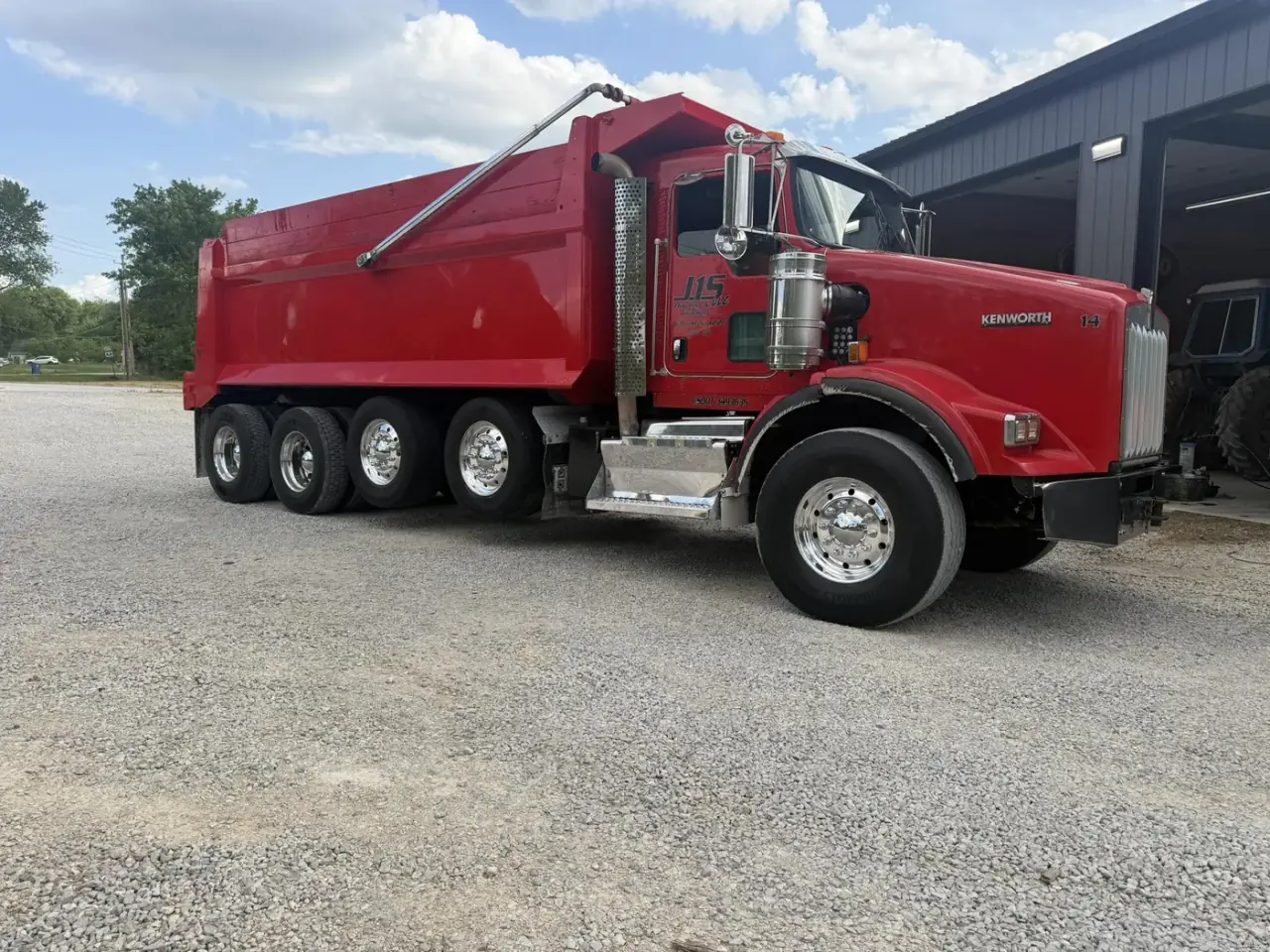
J1S runs quad-axle dump trucks that carry 14 cubic yards per load: about 18 to 19 tons of crusher run, or 16 to 18 tons of #57 stone depending on moisture. A small driveway under 15 tons still comes as a full load. If that is genuinely too much, contact us before ordering.
A 200 foot driveway in two layers needs about 88 tons, roughly 5 to 6 loads. Have the base loads delivered first, then the surface loads. Before delivery day, check for low branches and utility lines, firm ground for a loaded truck, and a place to turn around. The delivery access checklist covers it.
Building on clay ground
Jefferson County subsoil is mostly clay. It turns soft when wet and shrinks when dry, so gravel laid straight on it sinks and ruts. On raw clay, lay geotextile fabric (a woven separator cloth) before the base. It keeps the stone from pushing down into wet clay, adds a few hundred dollars, and adds years of life.
Shape the surface with a crown: the center 1 to 2 percent higher than the edges, so water runs off to the sides instead of soaking the base.
How long does a gravel driveway last?
A properly installed base layer is essentially permanent. The surface layer needs replenishment every 2 to 3 years as it compacts and spreads. Full regrading and rebase work is typically needed every 10 to 15 years on heavily used driveways, less often on light rural drives.
| Task | When |
|---|---|
| Add 1 to 2 inches of surface gravel | Every 2 to 3 years |
| Drag or box-blade to fill ruts and restore the crown | After heavy rain or winter; many owners do it yearly |
| Full rebase | Every 10 to 15 years on heavily used drives |
Sources
- NIST Handbook 44, Appendix C, General Tables of Units of Measurement: 12 inches equal 1 foot and 27 cubic feet equal 1 cubic yard, the two conversions behind dividing length times width times depth in inches by 324.
- FHWA and South Dakota LTAP, Gravel Roads: Maintenance and Design Manual: fines are needed to bind surface gravel together, and crushed, fractured stone embeds and resists movement under loads better than rounded stone (page 40); and a geotextile placed on a weak subgrade acts as a separator that keeps wet silt and clay from pumping up into the stone above (pages 30 and 31).