
Basement excavation, from layout to footing grade.
Full-depth basement and foundation excavation for new homes, additions, and walkout conversions. We stake it, strip it, dig it to the engineered elevation, deal with the rock and water Jefferson County ground throws at you, and come back to backfill once the walls are waterproofed. Serving Festus, Jefferson County, Kirkwood, and St. Louis County.
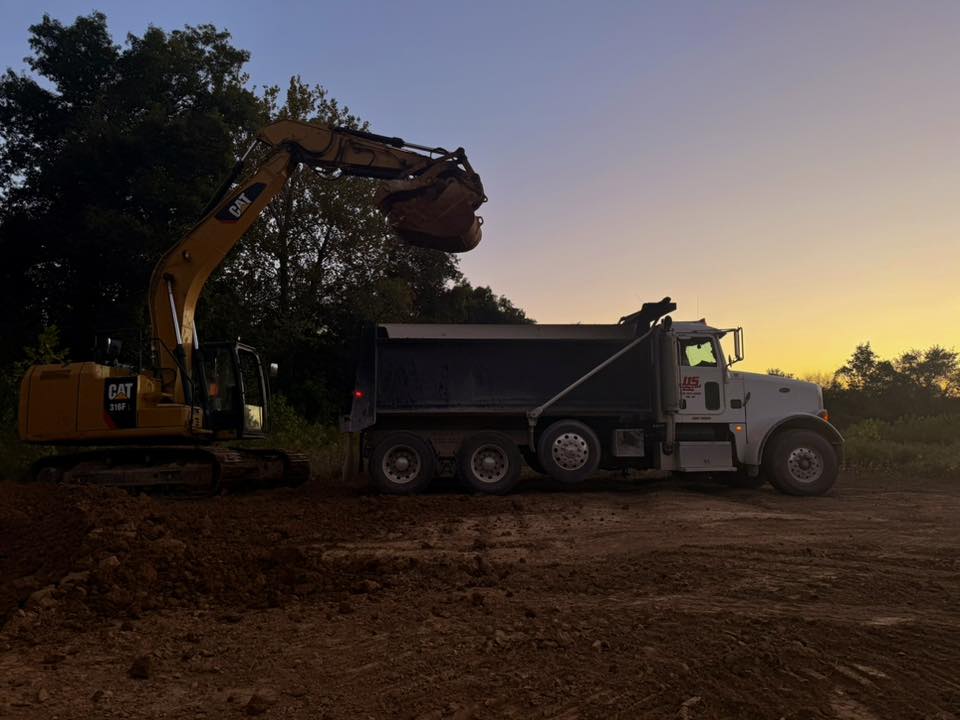 Foundation Digs
New-Home Basement Digs
The dig sets up everything the framer, the foundation crew, and the plumber do after it. We work from the surveyor's stakes and the foundation plan, strip and stockpile the topsoil separately, then cut to the footing elevation with enough overdig for forms and waterproofing. A ramp stays in so the concrete crew can get their equipment down. Spoil either goes in a pile you can reuse for backfill and rough grade, or it leaves on our trucks the same day.
- Cut to engineered footing elevation, checked with a laser
- 2–3 ft overdig for forms, drain tile, and waterproofing access
- Topsoil stripped and stockpiled separately from subsoil
- Spoil hauled off or piled for backfill, your call
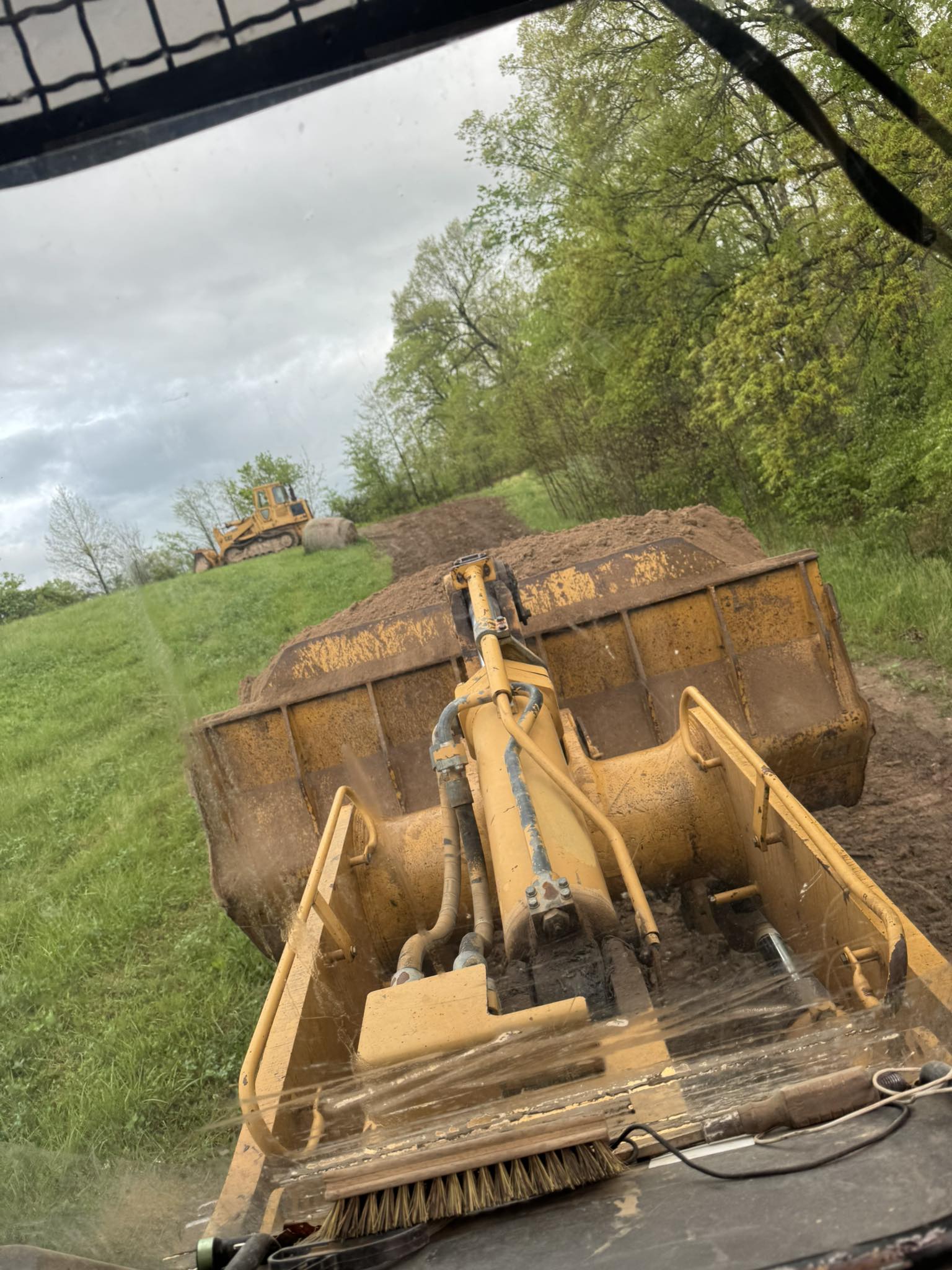 Full-Depth Dig
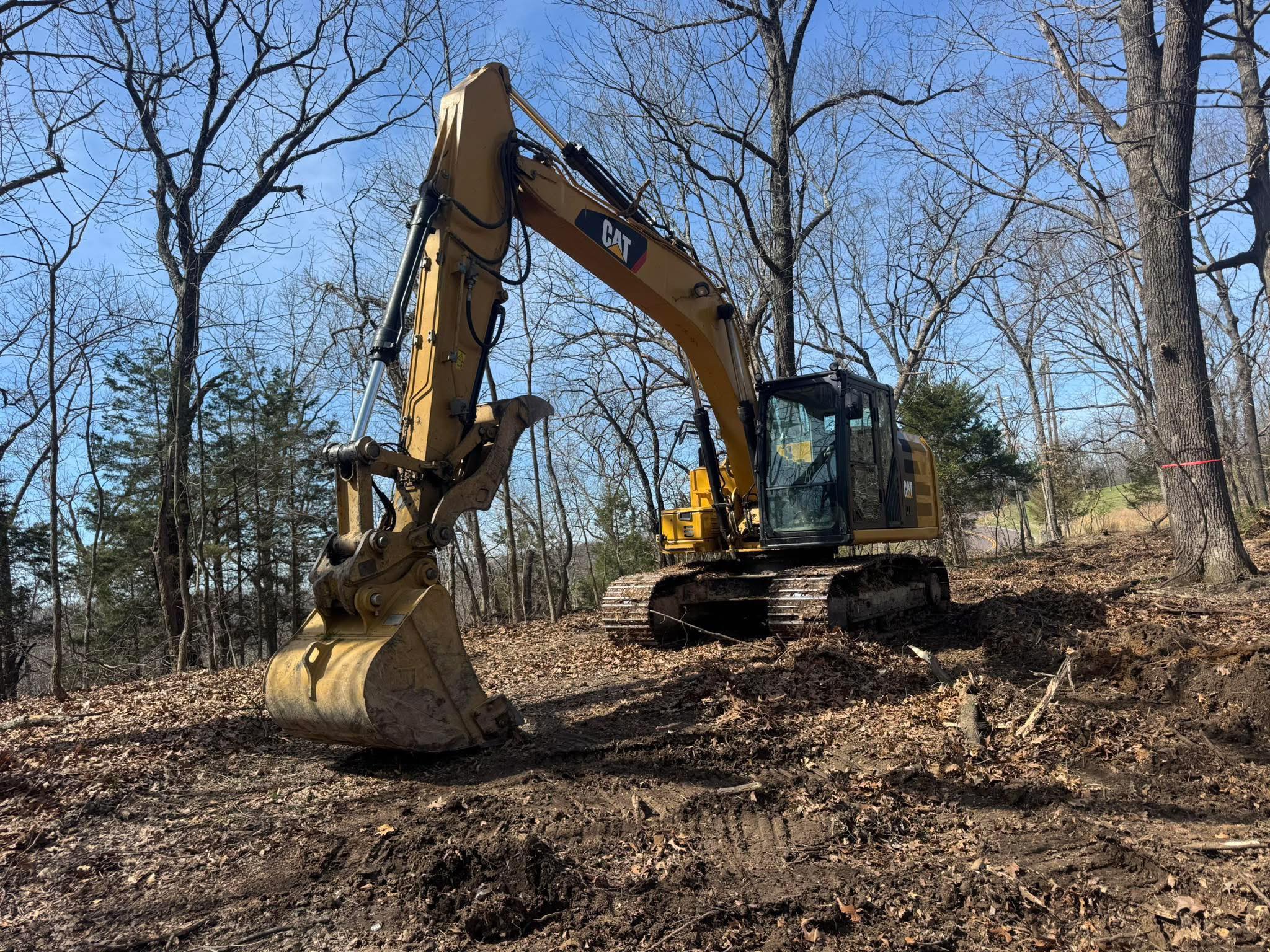 Tight Access
Additions, Walkouts & Tight Lots
Digging next to a house that is already standing is a different job than an open lot. Older neighborhoods in Kirkwood, Webster Groves, and Crystal City mean narrow side yards, mature trees, and a foundation a few feet away that cannot be undermined. We run mini excavators where the 8-ton and larger machines will not fit, bench or shore the cut where the soil needs it, and keep the existing footing supported.
- Room additions and attached-garage foundations
- Walkout basement conversions and egress window wells
- Mini excavators through a 6 ft gate
- Benching and shoring next to existing foundations
Rock, Groundwater & Backfill
Jefferson County sits on limestone, and a lot of basement digs hit a shelf of it somewhere between 4 and 9 feet down. We keep a hydraulic hammer available so hitting rock is a change in method, not a shutdown. Where the hole takes on water we cut a sump and pump it. Once your waterproofing and drain tile are inspected, we come back with clean stone for the tile and backfill in lifts so the walls are not loaded unevenly.
- Hydraulic hammer on site for limestone shelf
- Sump and pump for groundwater during the dig
- #57 stone delivered for drain tile and under-slab
- Backfill in lifts after waterproofing sign-off, then rough grade
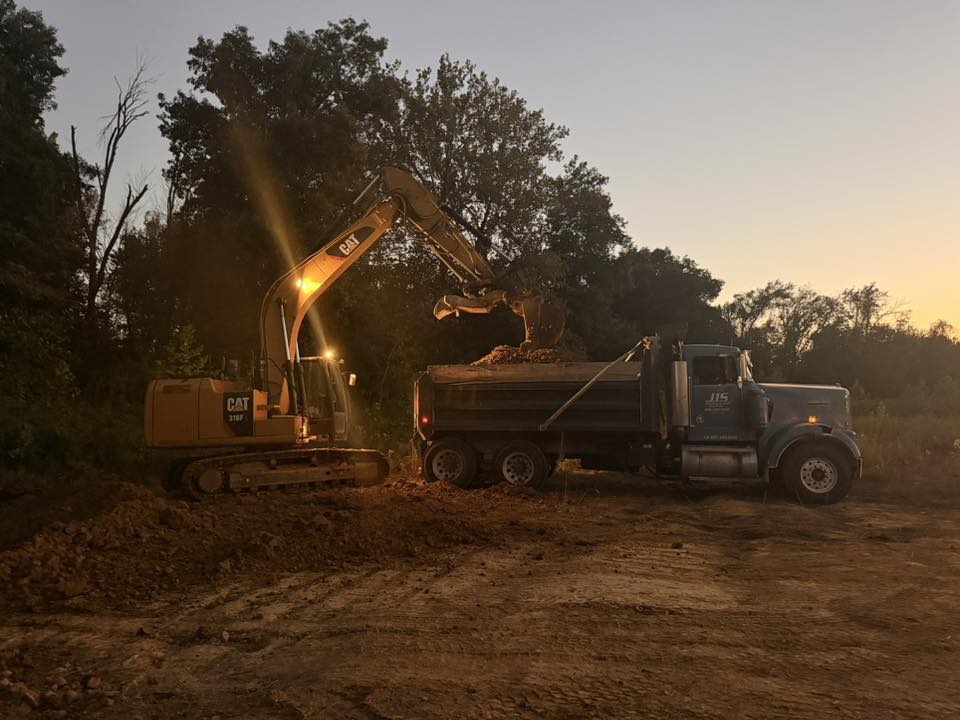 Backfill & Grade
Six steps from staked lot
to a hole the footing crew can use.
Stakes and plan review. 811 locate and a walk of the lot for access and spoil. Strip and stockpile topsoil. Cut to grade with the overdig, laser-checked at the corners. Footing and wall inspections by your foundation contractor and the county. Backfill in lifts and rough grade once waterproofing is signed off. A typical residential dig is one to two days on site; the backfill trip comes a few weeks later.
What builders and homeowners
ask before we dig.
Most of these come from homeowners building for the first time, and from builders checking how we sequence with their foundation crew.
How long does a basement excavation take?
One to two days on site for a typical residential basement, assuming normal soil. Hitting a limestone shelf or heavy groundwater can add a day. The backfill trip after waterproofing is a separate half-day visit, usually two to four weeks later depending on the foundation schedule. Planning a winter start? Read what changes when the ground freezes.
How deep is a basement dig?
Deep enough for an 8 or 9 ft wall plus the footing and the stone under the slab, so the bottom of the hole is usually 9 to 10 ft below the finished first floor. The exact number comes off the foundation plan and the surveyor's benchmark. We dig to that elevation, not to a round number.
What do I need to have ready before you dig?
Surveyor's stakes or corner pins, the foundation plan with elevations, your building permit, and the 811 locate ticket, which we can call in. If a builder is running the job, they usually hand us all of that. If you are acting as your own general contractor, call and we will walk you through the list.
Do you haul the dirt away or leave it on site?
Either. Most lots need some of the subsoil back for backfill and rough grade, so we stockpile that and haul the excess. On a tight lot with nowhere to pile it, the spoil leaves on our quad-axle trucks as we dig and we bring back clean fill for the backfill. We will tell you which makes sense when we look at the lot.
What happens if you hit rock?
We keep a hydraulic hammer available for basement work because a lot of Jefferson County lots have a limestone shelf inside the dig depth. Hammer time is billed separately from the excavation, and we will tell you as soon as we hit it so there are no surprises on the invoice. See our rock breaking page for how that works.
Do you do basement excavation in Kirkwood and St. Louis County?
Yes. We dig basements and foundations in Jefferson County and across St. Louis County, including Kirkwood, Webster Groves, Fenton, Chesterfield, and Ballwin. Older neighborhoods with tight access are a large share of that work, and it is where the mini excavator earns its keep.
Do you also do the backfill and rough grading?
Yes, and we would rather be the ones doing it. Backfill placed in lifts against a cured, waterproofed wall is what keeps the wall from bowing later. We bring the stone for the drain tile, backfill in lifts, and rough grade the lot so water runs away from the house. Finish grading and topsoil are a separate step when you are ready for it.
Before the foundation dig.
Send the site address, foundation plan, target elevations, and access photos. Identify where excavated material can stay and what must leave. The estimate should distinguish the initial dig, rock work, backfill, and the return visit after the walls are ready.
Request an excavation quoteSend the foundation plan.
We'll send a number.
Call dispatch or attach the plan to the quote form. We'll ask about access, spoil, and where the benchmark is, and get you on the schedule.