
Jefferson, Ste. Genevieve & St. Louis counties
Low pressure pipe (LPP) septic systems.
An LPP system is a septic system for ground a regular one cannot use. It pumps wastewater in small, even doses through shallow pipes, so it works in thin soil over rock and in ground that stays wet. Missouri requires an advanced installer for it, and J1S is licensed as one.
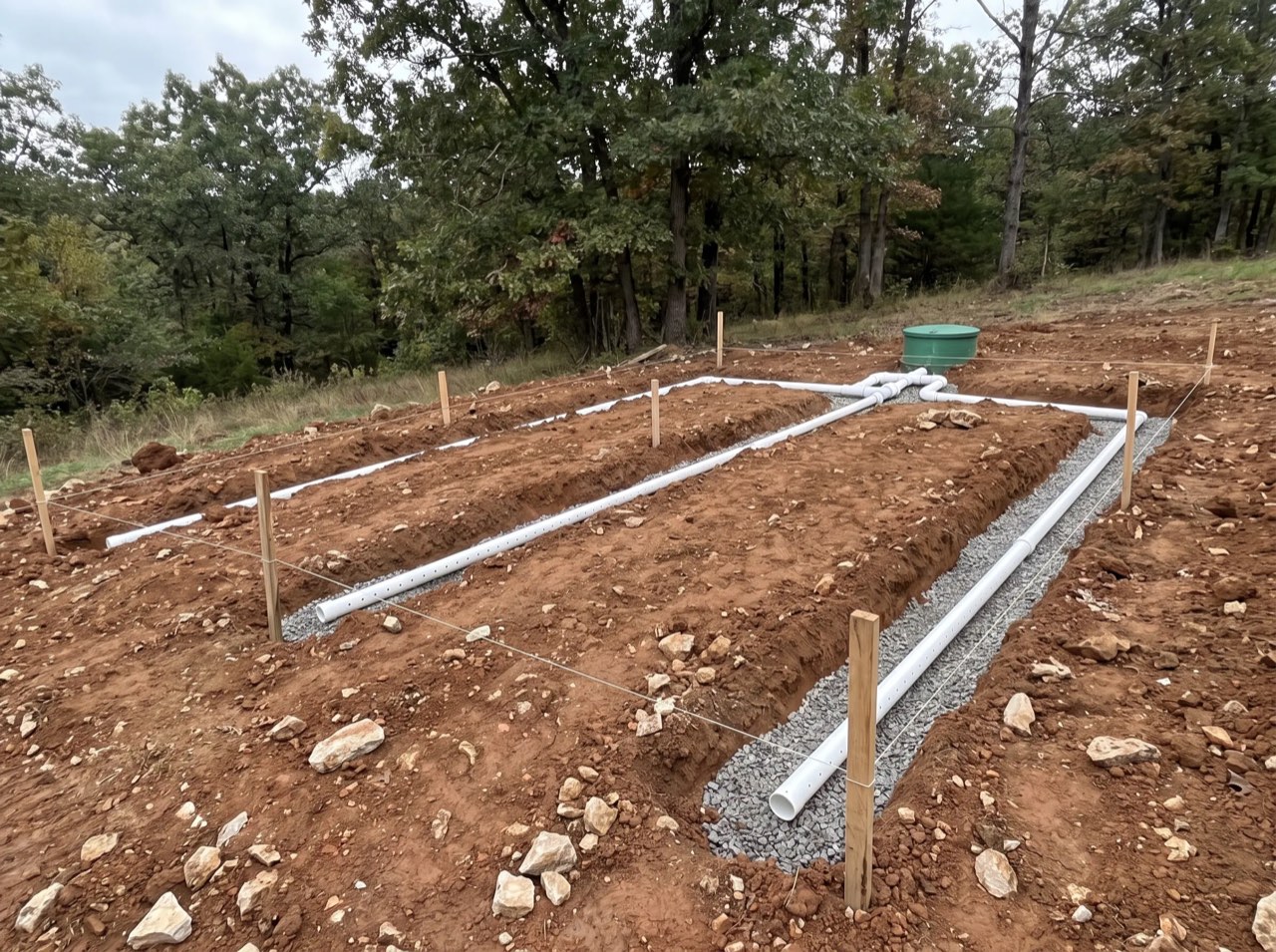
What an LPP system is
LPP stands for low pressure pipe. A regular septic system lets wastewater flow downhill by gravity into deep trenches. An LPP system uses a pump to push it through small pipes laid in narrow, shallow trenches, a little at a time.
The pipes are under pressure, so the wastewater comes out evenly along the whole field and no single spot is overloaded. The trenches are also shallow, so the wastewater is treated in the upper soil, well above rock or groundwater.
When a site needs LPP
Missouri's septic standards describe LPP as an option where a conventional system cannot be installed because of:
- Shallow soil. Rock is close to the surface, which is common across Jefferson County.
- A seasonally high water table. The ground is saturated near the surface in wet months.
- Slow soil. Clay that will not absorb water fast enough for a gravity field.
You do not choose LPP yourself. The soil evaluation shows what the ground can handle, and the designer specifies the system. If your report says LPP, it means the site was not suited to a conventional system.
How deep are LPP trenches?
Missouri's standards place LPP pipes at shallow depths, generally no more than 12 inches, in trenches at least 8 inches wide and spaced at least 5 feet apart on center. The pipes are 1 to 2 inches across and run at a pressure head of 2 to 4 feet.
A standard gravity trench is much larger. It is 18 to 36 inches wide, with its bottom 18 to 30 inches below the finished grade.
How much soil does LPP need?
Missouri's standards require at least 24 inches between the natural soil surface and bedrock, a layer that blocks water, or the seasonal high water table. The soil evaluation measures that depth, and the engineer designs the field from it.
The parts of an LPP system
| Part | What it does |
|---|---|
| Septic tank | Settles the solids, the same as any septic system |
| Pump tank | Collects the liquid from the septic tank until the next dose |
| Effluent pump | Pushes each dose out to the field |
| Controls and alarm | Run the pump and warn you if the level gets too high |
| Supply line | Carries the dose from the pump to the field |
| Laterals | Small perforated pipes that spread the dose through the trenches |
The pump is a submersible sewage effluent pump with dosing controls and a high water alarm. Missouri's standards state that a sump pump is not acceptable.
Design and permits
An LPP system is engineered. Missouri's standards call for the design to carry the seal of a Missouri-registered engineer, who sizes the pump, the pipes, and the field for your soil and your home. The permit is issued from that design.
The state also limits who can build it. Only installers licensed as advanced may install systems Missouri lists as advanced, and pressure systems like LPP are in that group. J1S holds the advanced license. See septic system installation for what that covers.
How we install it
- Layout. The tanks and field are staked from the engineer's plan, and buried utilities are located.
- Tanks. The septic tank and pump tank are set level on a firm base.
- Trenches. Narrow, shallow trenches are dug along the contour of the ground and kept level.
- Pipe. The supply line and laterals go in at the sizes and spacing on the plan.
- Pump and controls. The pump, floats, panel, and alarm are installed and wired.
- Testing. The system is run with water to check that every lateral gets an even dose.
- Inspection and cover. The system is inspected, then covered and graded.
Equipment stays off the field area during the job. Packed soil will not absorb water, and that matters most on a site that was marginal to begin with.
Living with an LPP system
- Keep heavy things off the field. The pipes are shallow. No vehicles, sheds, or livestock.
- Have it inspected every year. The EPA says systems with pumps, float switches, or mechanical parts should be inspected about once a year. A gravity system is usually inspected every three years.
- Know your alarm. If it sounds, use less water and call for service. Do not switch it off and ignore it.
- Pump the tanks on schedule. Solids that reach the pump or the small pipes cause trouble.
- Spread out water use. Several loads of laundry in a row can send more water than the system is dosed to handle.
- Send rain elsewhere. Keep downspouts and surface water away from the field.
LPP or another system?
If the soil is deep and drains well, a conventional gravity system is simpler and costs less. If the lot is wooded, oddly shaped, or very shallow, a drip system may fit where LPP trenches will not. If you are replacing a failed system, read about septic replacement first.
J1S is based in Festus and installs LPP systems in Jefferson County, Ste. Genevieve County, St. Louis County, and nearby counties. In Ste. Genevieve County that includes Ste. Genevieve, Bloomsdale, St. Mary, and the rural lots between them.
Common questions
LPP systems
What does LPP stand for?
Low pressure pipe. It describes how the system spreads wastewater: a pump pushes it at low pressure through small perforated pipes laid in shallow trenches.
Why would my property need an LPP system?
Because the soil report says a conventional system will not work. The usual reasons are shallow soil over rock, soil that drains slowly, or a water table that rises close to the surface in wet seasons. An LPP system keeps the wastewater in the upper soil and spreads it evenly, which those sites need.
Does an LPP system need electricity?
Yes. It has a pump, a control panel, and an alarm, so it needs a power supply near the pump tank. The pump runs in short doses, not continuously.
What maintenance does an LPP system need?
More than a gravity system, because it has moving parts. The tanks are pumped on a regular schedule, the pump and floats are checked, and the lines are flushed from time to time. If the alarm sounds, cut back on water and call for service.
What will my yard look like afterward?
You will see the lids for the septic tank and the pump tank, a control panel, and a few small caps at the ends of the lines. The field itself is under grass. It is shallow, so nothing heavy should drive or park on it.
Is an LPP system more expensive than a conventional one?
Yes. It adds a pump tank, a pump, controls, electrical work, and an engineered design. It is often less than the other options a difficult site would need, and it is what makes some lots buildable at all.
Send us your soil report.
If your soil test or your designer says LPP, send us the plan and your address. If you have not started yet, tell us, and we will explain what comes first.
Request an LPP quote Call (636) 331-5757