
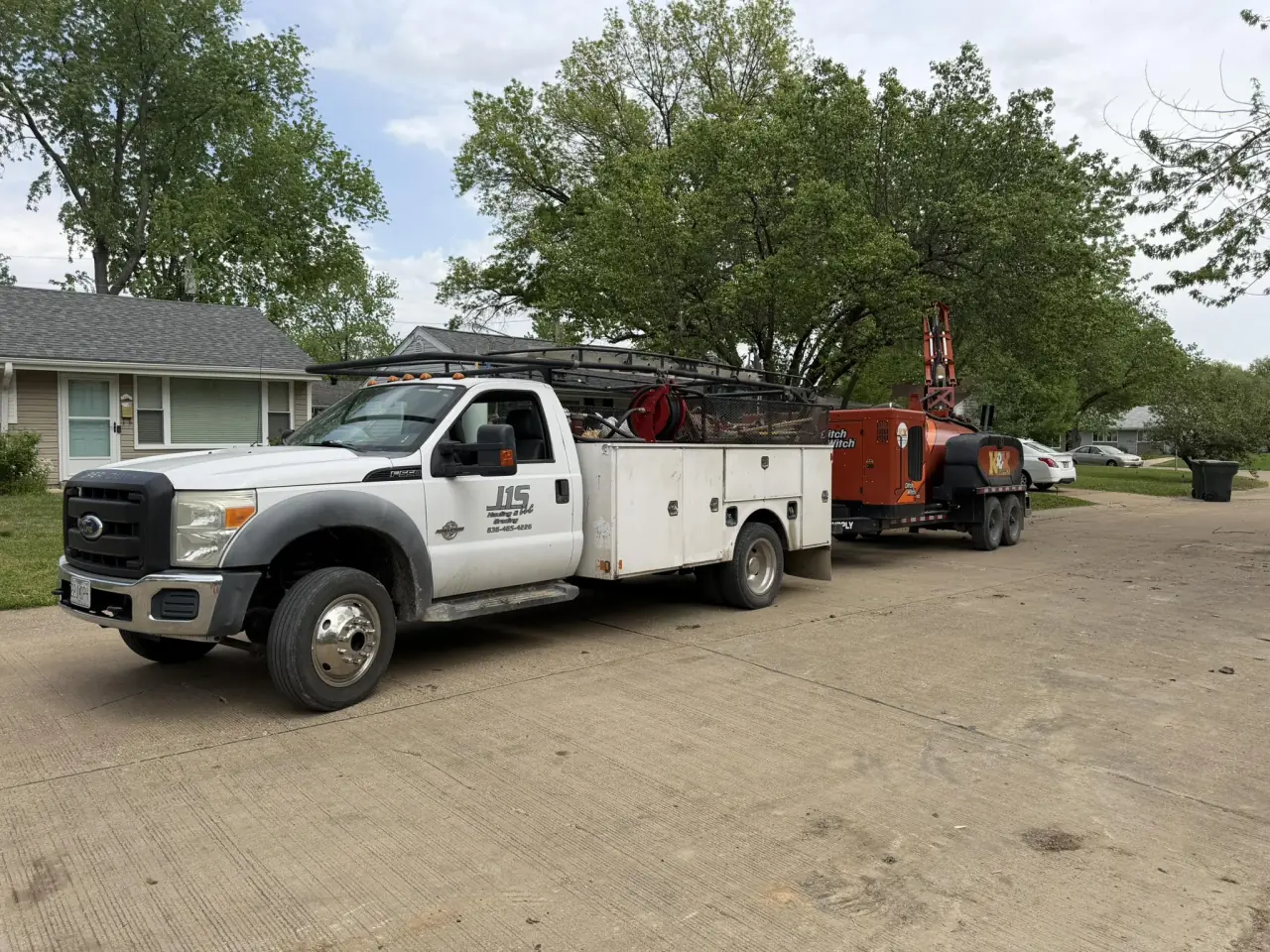
How much does a new water line cost?
A new residential water service line from the house to the meter typically costs $2,500 to $6,000 all-in for Jefferson County work. A run to an outbuilding is usually $1,200 to $3,500, and boring under a driveway adds $800 to $2,000.
Cost by item
These ranges come from typical Jefferson County residential work. They are not quotes; footage, depth, what the route crosses, and the district's tap fee move the number most.
| Item | Typical range |
|---|---|
| New residential service line, house to meter | $2,500 to $6,000 all-in |
| Run to an outbuilding off the existing service | $1,200 to $3,500 depending on distance |
| Directional bore under a driveway | $800 to $2,000 |
| Hydrovac potholing at utility crossings | $250 to $450 per hour plus mobilization |
| Rock excavation along the route | Quoted per job, by depth and hardness |
| District tap fee and meter set | Set by the water provider, not the contractor |
The two things that most often push a job over the estimate are rock nobody knew was there and surface restoration nobody priced. Ask about both before you sign.
Do I need a new line or a repair?
Repair when the pipe is sound and one spot failed. Put in a new line for new construction, for a barn, shop, or other outbuilding that needs its own run, for a line you have already patched twice (galvanized steel and older polybutylene keep failing), or for a line too small for the house, such as a 3/4 inch run feeding added bathrooms or irrigation. Our water line repair guide covers the repair decision.
How deep does a water line go?
Your water provider sets the minimum depth, and it is deeper than the frost line. Missouri American Water's standard for St. Louis County is 42 inches of cover; Jefferson County districts set their own, so we confirm it before trenching. The depth has to hold along the whole run: a line that rises to 20 inches to get over a rock ledge will freeze and fail there. Break through the rock or go around it.
Which pipe should go in?
| Material | Where it fits | Watch out for |
|---|---|---|
| HDPE (poly) | The default for new residential lines. It comes in a continuous roll, so a run can go in with no buried joints. | Needs proper end fittings and a tracer wire, since plastic does not show up on a locate. |
| Copper | Short runs, connections, and some older district specs. | Costs more, some soils are hard on it, and buried joints are failure points. |
| PEX | Common indoors; allowed underground in some places with the right rating. | Confirm the district accepts it for buried service before buying. |
Any pipe gets bedded in sand or fine material, never dropped on rock, because a sharp stone pressing on plastic pipe becomes a slow leak. We bed new lines in mason sand.
Trench or bore?
Most of a residential run is open trench: faster, cheaper, and easy to restore in open yard. Boring earns its cost at obstacles:
- Driveways and sidewalks, where cutting and replacing concrete usually costs more than the bore.
- Roads, since most jurisdictions will not permit an open cut across a public road for a service line.
- Finished landscaping, when restoring it would cost more than the bore.
- Mature trees, which trenching through the roots can kill.
The usual build is a hybrid: trench the yard, bore the driveway. More in our utility trenching guide.
Before any digging, Missouri law requires a locate request. The paint marks are approximate, so where the new line crosses gas, electric, or fiber, expose the existing line with a hydrovac first. Soft-digging a crossing costs a fraction of hitting a gas line.
Permits, taps, and inspection
Depending on the address, water in Jefferson County comes from a municipal utility, a public water supply district, or a private system. Each sets its own rules for pipe material, meter setting, tap fees, and who may connect to the main.
Call the water provider first. Confirm the tap fee, the approved materials, and who makes the connection. Then make sure the line is inspected before it is backfilled. Once the trench is closed nobody can check depth, bedding, or the pipe, and a missed inspection means reopening it at your cost.
How long does it take?
A straightforward run in open yard is typically one to two days of work once permits are in hand and locates are marked. The wait is the locate turnaround, the district's tap scheduling, and the inspection window, so start those conversations a couple of weeks before you want a trench open. J1S installs new water and sewer service lines from Festus through the St. Louis metro and quotes same-day for most local jobs after a site visit.
Common questions
How deep should a water line be?
Your water provider sets the depth, and it is deeper than the frost line. Missouri American Water's standard for St. Louis County is 42 inches of cover on a service line; Jefferson County districts set their own, so confirm the depth before trenching. Depth also has to stay consistent along the run, because a shallow section over a rock ledge becomes the freeze point.
Do I need a permit?
Yes, and the authority depends on the property. Water service in Jefferson County is handled by municipal utilities, public water supply districts, or private systems depending on location, and each sets its own requirements for materials, tap fees, meter setting, and who may connect to the main. The line must be inspected before it is backfilled.
Should a water line be trenched or bored?
Most of a residential run is open trench, which is faster and cheaper across open yard. Boring earns its cost at specific obstacles: under driveways, sidewalks, and roads, through finished landscaping, and around mature trees where trenching through the root plate would kill them. The common build is a hybrid: trench the yard, bore the driveway.
What pipe is used for a new water line?
HDPE poly is the default for new residential service lines because it comes in a continuous roll, allowing a full run with no underground joints. It requires a tracer wire since plastic will not show up on a utility locate. Copper is still used for short runs and where an older district spec requires it. Confirm the material with your water provider before buying.
Sources
- Missouri Revisor of Statutes, RSMo 319.026: requires notice to the notification center before excavation begins.
- Missouri Revisor of Statutes, RSMo 319.015: defines the approximate location of a marked facility as its width plus two feet on either side.