
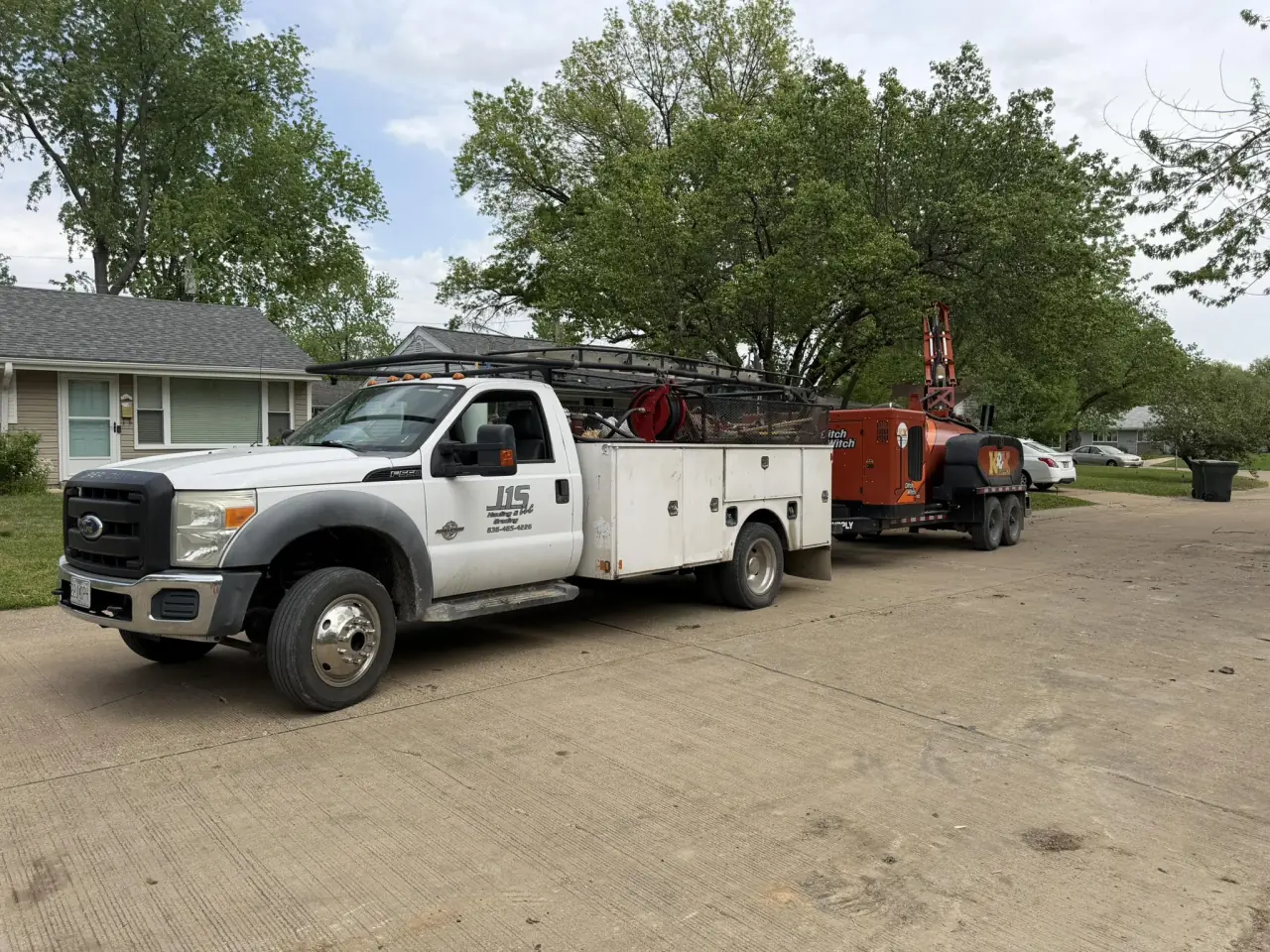
How much does water line repair cost?
A water line repair with a compression coupling on an accessible line typically costs $400 to $900, plus $200 to $600 for the excavation to expose the break. Replacing the full service line from the house to the meter runs $2,500 to $6,000 all-in.
Cost by job
These ranges come from typical Jefferson County residential jobs. They are not quotes; an accurate number needs a site visit.
| Work | Typical range | What moves the price |
|---|---|---|
| Locate and pothole to confirm the break | $150 to $300 | More if hydrovac equipment is needed |
| Excavation to expose the break | $200 to $600 | Depth, soil conditions, and access |
| Compression coupling repair on an accessible line | $400 to $900 | Parts and labor |
| Full service line replacement, home to meter | $2,500 to $6,000 all-in | Footage, material, and surface restoration |
| Emergency mobilization, nights and weekends | Add 25 to 50% | Added to base pricing |
How do I know my water line is leaking?
The fastest test: turn off every fixture and appliance in the house, then look at the water meter. If the dial is still moving, water is leaking somewhere.
Other signs:
- A wet or extra green patch in the yard that stays green in a dry spell or wet after rain stops.
- Lower pressure at every fixture that does not come back. A break can be losing water before it reaches the house, or the pipe has narrowed from buildup or corrosion.
- A higher bill with no change in how you use water.
- Rusty or dirty water. Rust points to corroding iron pipe; dirt can mean soil is getting in through a break.
- New foundation cracks or settling. A leak near the foundation can wash away the soil under it. If you are calling a foundation contractor, have the water line checked too.
Slow drains, backups, or ground sinking over a drain path usually point to the sewer line instead.
Is the line mine or the utility's?
The main under the street belongs to the municipality. The service line from the main to your house is yours, typically from the tap at the main to your meter, or in some places from the meter to the house. Festus, Crystal City, and Jefferson County utilities each set their own policy. If the leak is in your yard between the street and the house, you are almost certainly paying for it. One call to your utility to confirm where their part ends can save a lot of arguing later.
Repair or replace?
Repair an isolated break in copper, PVC, or other modern pipe that is otherwise sound, when something outside the pipe caused it (roots, soil movement, a hit) and the pipe is solid enough to hold a coupling.
Replace the line when:
- It is galvanized steel, common in homes built before 1970 here. It corrodes from the inside, and once one section fails the rest is close behind; a patch often buys only 12 to 18 months.
- The same line keeps failing, or the pipe is too far gone for a fitting to grip.
- It is shallower than the frost depth and has already frozen once.
Can frost break a water line?
Jefferson County's frost line is typically 18 to 24 inches. A line closer to the surface than that, which some older homes have, is at risk in a hard winter, and yearly freezing and thawing stresses joints, especially in corroded galvanized pipe. If you replace a line after a freeze, put the new one at the depth your water provider requires, not where the old one failed; Missouri American Water's standard for St. Louis County is 42 inches of cover.
How does the repair work?
- Locate and call 811. The contractor traces the line from the meter, and Missouri law requires notice before any digging. Where other utilities share the path, hydroexcavation opens the spot with pressurized water so nothing buried gets hit.
- Repair. A compression coupling for an isolated break in good pipe; cut out the bad piece and splice in new pipe; or replace the whole line from tap to meter, typically in HDPE or copper. Copper to plastic needs the right transition fittings.
- Pressure test, backfill, restore. The repair is pressure tested and checked for seeps before the trench is filled in compacted layers, as on any utility trench. Topsoil goes over the trench, then sod or seed to match.
Getting a quote
Send the address, roughly where the problem is (near the street, mid-yard, or near the house), the pipe material if you know it, and whether the water is off or the house is occupied. J1S quotes same-day for most Jefferson County jobs. Plan to be there for the walk; the contractor needs to see the grade, the meter, and the problem area to give a number that holds.
Common questions
How long does a water line repair take?
Most residential repairs are a one-day job from excavation to backfill, assuming no complications and the necessary parts are on the truck. Full service line replacements on longer runs may extend into a second day if the footage is significant or surface restoration is involved.
Will the water be off the whole time?
Yes. The line gets shut off at the tap or meter during repair. Most jobs restore water the same day. If you're going to be without water for more than a few hours, the crew will let you know before they start.
Do I need a permit?
Yes, in most Missouri jurisdictions. Jefferson County requires a plumbing permit for service line replacement. The contractor typically pulls this permit as part of the job; confirm that when you get your quote so there are no surprises on the back end.
What pipe is best for a new water line?
HDPE and copper are the standard choices in Missouri. HDPE is flexible, freeze-resistant, and won't corrode, so it's a strong choice for most residential replacements. Copper costs more but has a proven long service life and is widely accepted by local utilities and inspectors. Avoid galvanized for any new installation.
Sources
- Missouri Revisor of Statutes, RSMo 319.026: requires notice to the notification center before excavation begins.
- EPA WaterSense, Fix a Leak Week: checking the water meter while no water is in use as a test for leaks.