
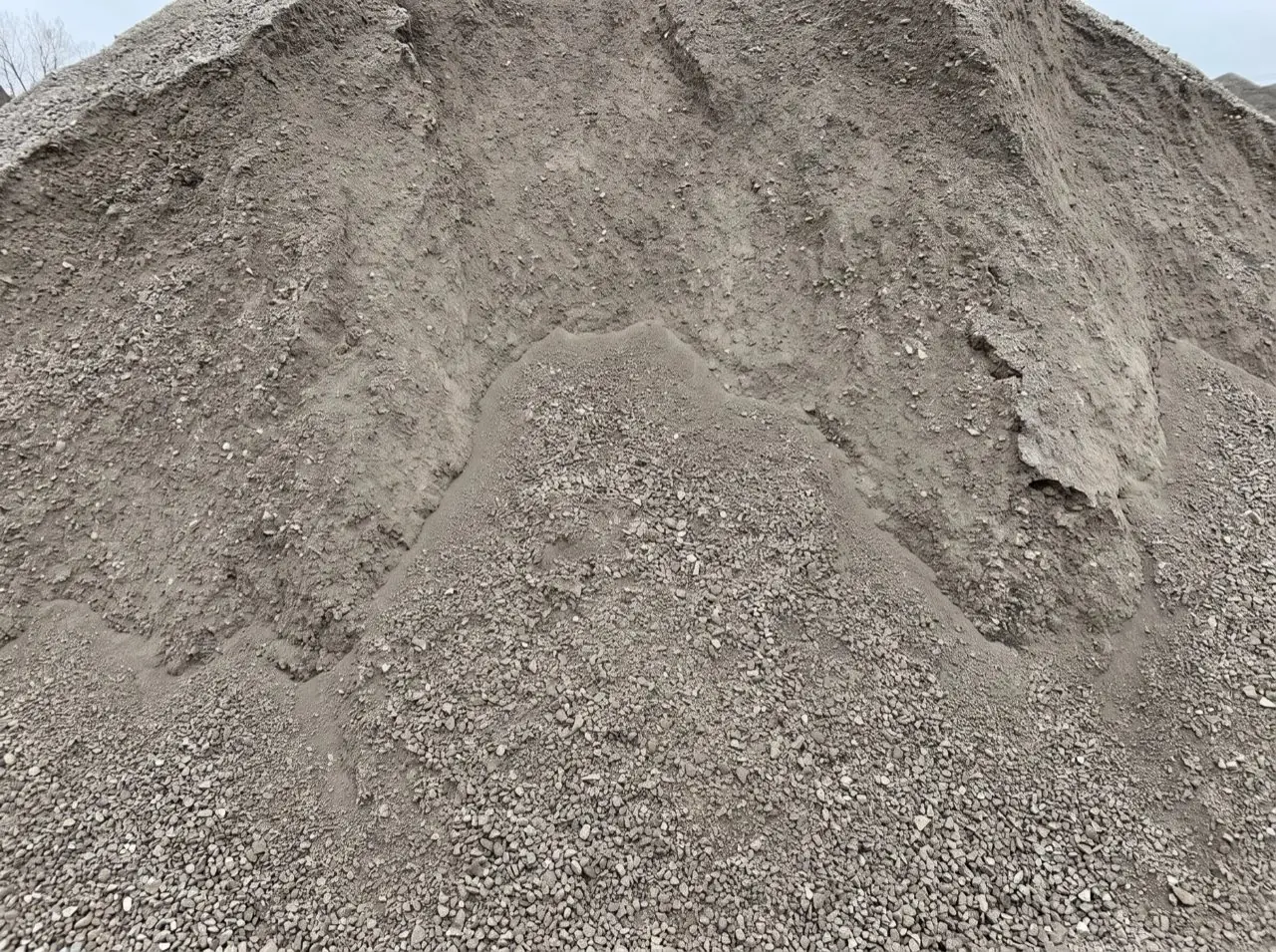
Is stone dust the same as screenings?
Sometimes. Limestone screenings are always crushed limestone; stone dust is a looser yard term that can mean limestone, granite, or another crushed rock, from fine dust to a mix with small chips. Both pack into a firm surface and both drain poorly. So the name matters less than what is in the pile and what layer you are building.
The screenings J1S stocks are ¼-inch minus: chips no bigger than ¼ inch, down to dust.
What to check before you order
| Material name | Ask about | Mistake to avoid |
|---|---|---|
| Limestone screenings | Largest chip size, how much dust, washed or not | Assuming it drains like clean stone |
| Stone dust | What rock it is and the actual particle sizes | Assuming every quarry sells the same product |
| Crusher run | Stone size and the base spec | Using fine screenings in place of a specified base |
| Concrete bedding sand | The paver maker's required grading | Ordering mason sand because both are called sand |
| Clean limestone | Stone size and drainage design | Expecting a smooth, firm path surface |
If two quotes use different names, ask whether they come from the same source and have the same gradation (the mix of particle sizes). For work on a plan, ask for the supplier's spec or sieve analysis.
Which is better for a walking path?
Either can make a firm path if the ground is prepared, shaped, and compacted for it. Plan for water first: see where roof, uphill, and lawn runoff will go, because a path in a low strip stays wet no matter how neatly it is spread. If the path runs next to a driveway, order them separately; the driveway needs a load-bearing base such as crusher run.
Can I use either under pavers?
Not as the bedding layer under concrete pavers. That is the thin layer right under the pavers, separate from the deeper base. CMHA's interlocking concrete pavement specification excludes stone dust and mason sand as bedding and sets grading rules for bedding sand. A pile labeled "paver base" does not prove it belongs right under the pavers.
Give the supplier your paver maker's instructions and order the base and bedding as separate items. Permeable paving uses a different stone system, so check its design.
Are washed screenings different?
Yes. Washing removes some of the dust, so washed and unwashed piles can compact and drain differently. Washing does not turn screenings into approved bedding sand. For a drain, start with the drain design and a clean stone such as #57 limestone.
What are concrete screenings?
The fine material left when recycled concrete is crushed and screened, so they are not limestone. If a quote says "screenings" without naming the stone, ask what the pile is made from. A spec that names limestone screenings is not met by a recycled product.
What to send with your order
- The use: path surface, base, paver bedding, or another specified layer.
- The size: length, width, and depth of that layer.
- The material: a product name and spec, if your installer gave you one.
- The address and access: where the truck can enter and unload.
Compare delivered totals for the same quantity and spec; price per ton alone leaves out the truck trip. If you are unsure about the unloading area, use the gravel delivery access checklist.