
Plumber or excavator for a sewer line?
If the problem is inside the house, call a plumber: fixtures, drains, and piping under the slab are plumbing. If it is outside the foundation, in the sewer lateral (the buried line from the house to the public sewer), the fix means digging, so call a licensed drain layer with excavation equipment. If you do not know where the problem is, start with whoever can run a sewer camera today.
Who to call, by situation
| Situation | Usual first call |
|---|---|
| One fixture is slow or clogged | Plumber |
| Whole house backs up; cause unknown | Whoever can run a camera today |
| Camera shows a failure outside the foundation | A licensed drain layer with excavation equipment |
| The line runs under a driveway, sidewalk, or street | Excavation contractor; ask about pavement removal and permits |
| Gas, water, or electric lines cross the dig | Contractor with soft-dig capability |
| Problem is under the basement slab | Plumber, sometimes with a concrete crew |
Why start with a camera?
A backup at the lowest drain can come from a clog a few feet from the house or a collapsed pipe near the street. A sewer camera shows what failed and where: roots, a separated joint, a sag holding water, or a collapse. A locator on the camera head lets the crew mark the spot on the surface and estimate its depth. Ask for the recording, or a clear description of it and the measured distance to the problem. To decide between fixing one spot and replacing the line, see sewer line repair versus replacement.
What each one does
A plumber clears blockages with a cable or jetter, runs camera inspections, and works on piping inside the building and under the slab. Many plumbing companies do not own excavators or dump trucks, so for a deep outside repair they commonly hire out the dig. That works, but it adds a party to schedule and a markup on the excavation.
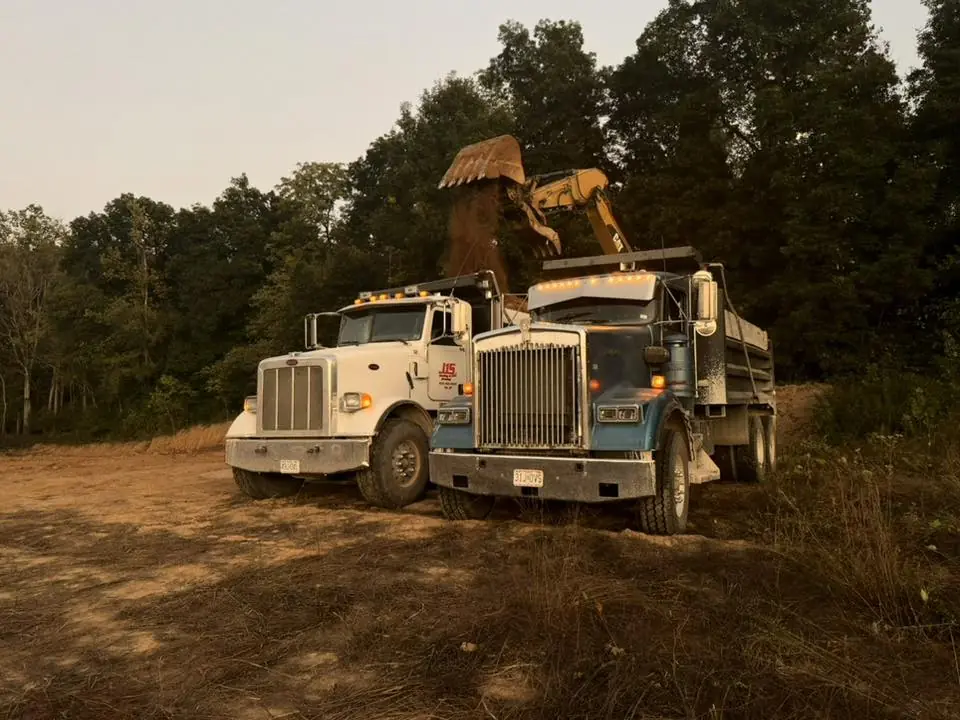
An excavation contractor digs to the line, including deep laterals and work under pavement, exposes it safely where other utilities cross, backfills in compacted layers, restores the grade, and hauls off spoil and broken pavement. Not every excavator can legally touch the pipe: sewer lateral work is licensed and permitted in many places. J1S is a licensed drain layer and an MSD approved contractor, so the dig, the repair, and the backfill are one job with one company. See sewer and water repair.
Where other utilities cross the lateral, they should be exposed by hand or by hydrovac potholing before a bucket works near them. A public locate marks utility-owned lines; private lines on your property are often not marked. Locating versus potholing explains the gap.
Permits, programs, and who pays
The lateral is generally the property owner's responsibility up to the public sewer connection, but rules differ by sewer district and city. Before work starts, confirm:
- Who pulls the permit. Normally the contractor doing the repair. An inspection is commonly required before the trench is closed.
- Whether a repair program applies. Some St. Louis area municipalities help pay for qualifying lateral repairs. Check with your city before you hire; programs often require their own inspection first.
- What insurance needs. Camera footage, the permit, and the inspection sign-off are the usual records.
Questions to ask before anyone digs
Are you licensed to repair the lateral here, and will you pull the permit? Do you do the excavation yourselves? How deep is the problem, and how was that measured? What is above the line, and who restores it? How are other utilities exposed? Is backfill compacted in layers? What is not included in the price?
If a camera already found the problem outside the house, send us the footage or the measured location with the address. For an active backup, call dispatch; J1S responds 24 hours for sewer and water emergencies in Jefferson County and the St. Louis metro.
Sources
- Metropolitan St. Louis Sewer District, Sewer Backups: the lateral line, including the connection, is private property, and maintaining and repairing it is the property owner's responsibility.
- Metropolitan St. Louis Sewer District, Frequently Asked Questions: homeowners are responsible for sewer laterals, and MSD refers owners to St. Louis City, St. Louis County, or their municipality for lateral repair programs.
- OSHA, 29 CFR 1926.651, Specific Excavation Requirements: before excavating, utility owners must be asked to locate their lines, and when digging approaches them, their exact location must be determined by safe and acceptable means.