
Should I repair or replace my sewer line?
Repair it when the camera shows one isolated problem in otherwise sound pipe, and replace it when the damage runs along the line or the pipe is old clay. In Jefferson County a spot repair typically costs $1,500 to $3,500, and a full lateral replacement costs $4,000 to $12,000.
What the camera found, and what to do
A sewer camera runs through the line from a cleanout (a capped access pipe) or a pulled toilet and records each problem and how far down the line it is.
| Camera shows | Usually means |
|---|---|
| Roots at one joint, pipe intact | Clean it, or a spot repair |
| Roots at every joint | Replace; cleaned roots return within two to three years |
| One offset or separated joint | Check nearby joints; in clay, others have usually moved too |
| Several problems along the run | Replace |
| Any collapsed section | Dig it out; a liner cannot go in a collapsed pipe |
| Pitted, flaking, or thin pipe wall | Replace; repair fittings will not hold reliably |
| Camera cannot get through | Treat as a replacement in most cases |
When is a repair enough?
A repair is a real fix when the damage is one section of the run, the camera shows clean, intact walls everywhere else, and the pipe is PVC or cast iron in reasonably good condition. If the line is failing in several places, a repair is often a down payment on a replacement: three spot repairs cost nearly as much as a full replacement and leave the old pipe in the ground.
Why old clay pipe gets replaced
Most homes built before 1975 in the St. Louis metro and Jefferson County have clay sewer laterals (the line from the house to the public sewer). Clay is brittle, roots get in at every joint, and once it starts failing, sections keep failing. We see this constantly in Festus, Crystal City, Herculaneum, and older neighborhoods in Arnold. Many owners pay for a root cleaning every year without knowing the pipe itself is the problem. If you have an older home and have ever had a backup, a $200 to $450 camera inspection tells you which case you are in before the next emergency.
The water service line in the same house was often put in at the same time. If the sewer is failing in a 1960s home, have the water line checked too.
Trenchless or dig it out?
| Method | How it works | Use it when |
|---|---|---|
| Lining (CIPP) | A resin liner cures into a new pipe inside the old one; slightly smaller inside | The pipe is worn but not collapsed |
| Pipe bursting | A head breaks the old pipe outward and pulls new HDPE pipe in behind; pits at each end | Clay, cast iron, or PVC lines |
| Open cut | Dig down, remove the old pipe, lay new | Any collapse, no trenchless access, or you want every foot new |
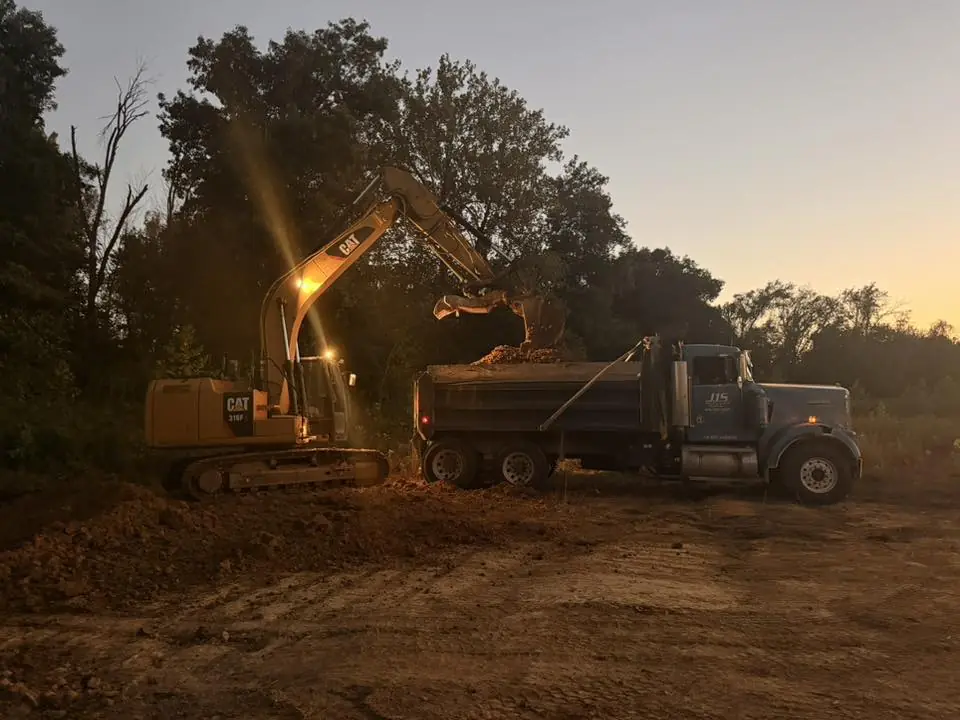
J1S does open-cut sewer work directly and partners with trenchless specialists for lining and pipe bursting when that fits the job.
What happens in an open-cut job?
- Call 811 and pothole. Missouri law requires notice before digging. Small test holes at each end confirm the pipe depth; hydroexcavation exposes the ends without risk of a bucket strike. Laterals typically run 4 to 8 feet deep at the house.
- Dig the trench safely. OSHA requires shoring or another protective system at 5 feet and deeper.
- Lay new pipe. SDR-35 PVC on proper bedding, sloped at least 1/4 inch per foot.
- Backfill in compacted layers, as on any utility trench, so the surface does not settle later.
- Connect to the public main. This usually needs a permit, a tap inspection, and the municipality's sign-off.
- Restore the surface where the driveway, lawn, or landscaping was disturbed.
What sewer work costs
| Service | Typical range | Notes |
|---|---|---|
| Camera inspection | $200 to $450 | Some contractors include it in repair quotes |
| Cleanout installation | $400 to $800 | If the house has no cleanout |
| Spot repair (open cut) | $1,500 to $3,500 | Short section with isolated damage |
| CIPP lining | $80 to $250 per linear ft | Plus access pits |
| Full lateral replacement | $4,000 to $12,000 | 30 to 60 feet typical; depth and access matter most |
These ranges come from Jefferson County residential jobs. Your price depends on the camera findings, depth, footage, what is under the surface, and permit timing. J1S gives same-day quotes for most local jobs; call or use the contact form.
Common questions
How long does replacement take?
Most residential full-run replacements are completed in one to two days. The variables that extend that timeline are depth, total footage, and permit inspection timing. If the municipality schedules inspections on specific days, that can add a day to service restoration.
Do I need a permit?
Yes, in most Missouri municipalities. Jefferson County and most incorporated areas, including Festus and Crystal City, require permits for sewer lateral work that connects to the municipal main. J1S pulls these permits as part of the job.
Can I use the drains during the work?
No. Service to the municipal main is disconnected during the work. Most full replacements are completed in a single day, so the interruption is limited. For jobs that require multiple days, emergency plumbing arrangements should be discussed with the contractor before work starts.
How long does a new PVC sewer line last?
SDR-35 PVC, correctly installed, is commonly given a service life of 100 years or more. It does not corrode, and its gasketed or solvent-welded joints are far tighter than the mortared joints in old clay pipe, which is where roots get in.
Sources
- Missouri Revisor of Statutes, RSMo 319.026: requires notice to the notification center before excavation begins.
- OSHA, 29 CFR 1926.652, Requirements for protective systems: requires a protective system in excavations 5 feet deep or more unless they are entirely in stable rock.