
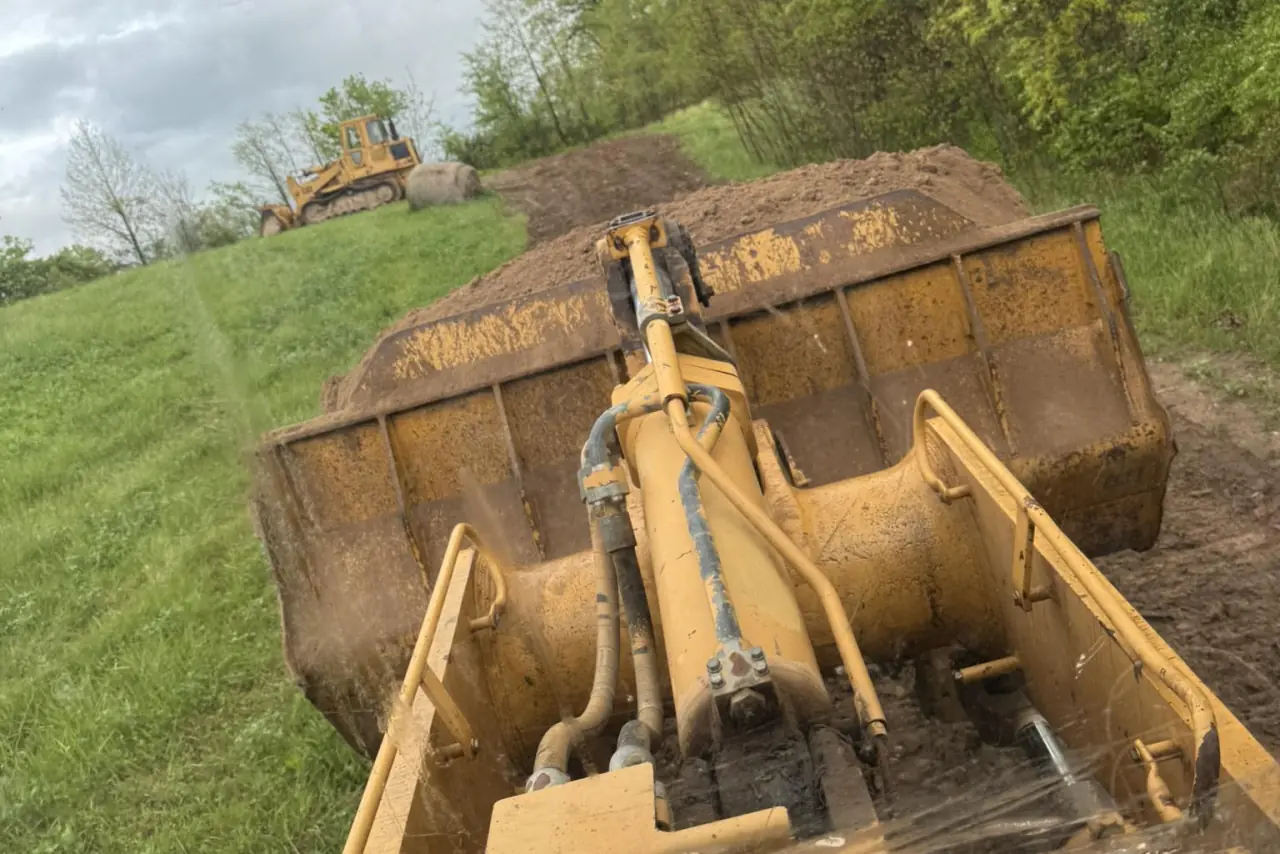
How much should a yard slope?
The ground should fall at least 6 inches over the first 10 feet away from the foundation, which is the standard in the residential building code. That is about a 5 percent slope. Where a lot line or a walkway makes 10 feet impossible, a swale (a shallow grassy channel) or a drain has to carry the water away instead.
To check it, lay a straight board or a string level from the foundation outward and measure the drop. Soil next to a house settles for years, so a grade that was right when the house was built can be flat or backwards now.
Does my lot need regrading?
- Water standing against the foundation or in the yard a day after rain.
- A damp basement wall or a sump pump that runs constantly in wet weather.
- Mulch and soil washing out of beds and across walks.
- Downspouts that empty onto ground sloping back toward the house.
- Ruts and washouts forming along a driveway edge.
A broken downspout drain or a failed yard drain looks the same from the surface. Check where the roof water goes first, because it is the cheapest thing to fix.
What does lot grading cost?
| Job | Typical cost |
|---|---|
| Correcting drainage in an average yard | $800 to $2,500 |
| Rough grading a 5,000-square-foot lot | $1,500 to $4,000 |
These are typical for the Jefferson County and St. Louis area. Bringing in fill for a low lot costs more. Access, the amount of soil to move, and hauling drive the price more than square footage does. The land grading cost guide breaks the ranges out by scope.
Why regrade in fall instead of spring?
Dry soil can be shaped accurately, while wet clay smears and ruts under equipment. Early fall is the best seeding window for the cool-season lawns common in Missouri; late fall work may need straw or a blanket over the soil until spring. And a corrected grade protects the foundation through the wettest months, when frozen ground sheds water instead of absorbing it.
Once the ground freezes or stays wet, finish grading and topsoil are better left for spring. See winter excavation in Missouri for what can be done in cold weather.
What does regrading a yard involve?
- Find where the water should go: the street, a ditch, a swale, or a drain. Sending it onto a neighbor's lot creates a different problem.
- Strip and save the topsoil so it can go back on top.
- Shape the subsoil. Fill and compact low areas and cut high ones until the surface falls the right way. Large fills use fill dirt, not topsoil; see fill dirt versus topsoil.
- Replace topsoil and finish grade. Four to six inches of topsoil goes back on, graded smooth.
- Seed and protect with straw or erosion blanket until grass takes over.
Keep the finished grade below the siding and the top of the foundation, as the code and the siding manufacturer require, so raising the grade does not create a moisture or termite problem.
Do driveways need it too?
Yes. A gravel driveway that ponds or washes out has no path for water off the surface. Regrading the crown and edges before winter keeps freeze-thaw from turning small ruts into potholes. See driveway grading and repair.
Getting it on the schedule
Send with your request: the address; photos after a rain if you have them; where water stands and where it should go; any drains, septic, or sprinkler lines in the area; and equipment access to the back yard.
J1S does lot grading and drainage work across Jefferson County and the St. Louis metro. Fall dates fill as the weather window closes, so earlier requests have more options.
Sources
- International Code Council, 2015 International Residential Code, Chapter 4 Foundations: Section R401.3 requires the grade to fall at least 6 inches within the first 10 feet, with drains or swales where lot lines or other barriers prevent it; Section R404.1.6 sets how far foundation walls must extend above finished grade.
- University of Missouri Extension, Cool-Season Grasses: Lawn Establishment and Renovation: late summer and early fall is the best time to seed cool-season lawns, straw mulch protects new seedlings and reduces erosion, and the finished grade should slope away from the foundation.