
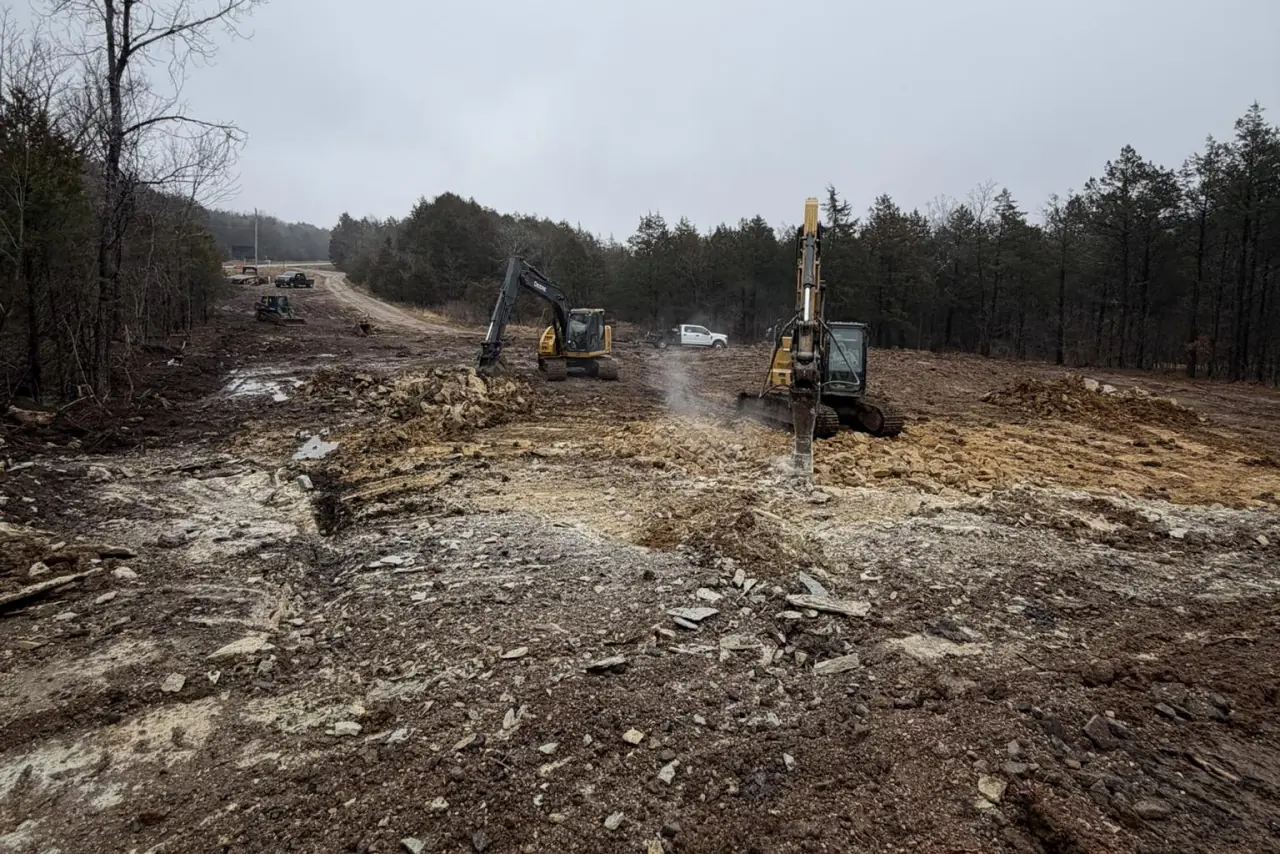
What does rock excavation cost?
There is no honest per-yard number before someone sees the rock. The price depends on how much rock is in the way, how hard and cracked it is, how much room the crew has, and where the broken rock goes. Before comparing quotes, separate the dirt work from the rock work and agree in writing how unexpected rock will be handled.
What changes the price?
| Factor | What to send |
|---|---|
| How much rock, how deep | Plans, finished elevations, any rock already exposed |
| How hard and cracked it is | A soil or rock report, if you have one |
| Room to work | Access photos and where the dig will be |
| Nearby buildings and utilities | Surveys, utility locations, details of neighboring foundations |
| Hauling the rock away | Space for a pile and any approved plan to reuse it |
| What the next trade needs | Foundation or utility details and inspection requirements |
A neighbor's basement or a nearby outcrop is useful context, but it does not measure the rock under your footings. Missouri DNR's limestone overview describes how common limestone is across the state; it says nothing about a single lot.
Questions to ask about the quote
- What counts as rock? A quote may include a rock allowance (a set amount of rock work), exclude rock, or price it separately. A loose boulder, cracked ledge and solid bedrock take different work.
- Who approves extra work? If rock shows up mid-dig, the contractor should describe it and the added scope before going ahead, with photos, dimensions and a written price basis.
- Result or hours? For hourly work, ask how progress is tracked and reported. For a unit price, ask what the unit is: rock in the ground, loose broken rock and scale-ticket weight are different measures.
- Is haul-off included? Ask about disposal charges and what happens if unexpected material turns up.
How does rock breaking fit in?
J1S's rock breaking service uses a hydraulic hammer to break ledge, boulders and concrete so they can be removed. Breaking is one part of the job; loading, hauling, final digging and prep for the next trade still need a line in the quote. Near a building or utility, the method needs a site review for vibration, clearance and buried lines.
For a basement, ask how rock affects the footing schedule, inspections and concrete crew. Digging should follow the approved design, even when a shallower cut would dodge a hard spot.
Can the broken rock stay on site?
Sometimes, if it has an approved use. Large pieces do not automatically make good compacted fill under a slab or foundation. If it has to go, plan where trucks can load without blocking the dig; our hauling page covers that. Price breaking and haul-off together so nobody is left owning the pile.
What to send for an estimate
The address, what you are digging for, plans and elevations, access photos, and any soil or rock report. If rock is already exposed, send photos taken from outside the hole and rough dimensions. Nobody needs to climb into an excavation for a quote photo.
For county work, see rock breaking in Jefferson County. For the whole project budget, use the Missouri excavation cost guide.