
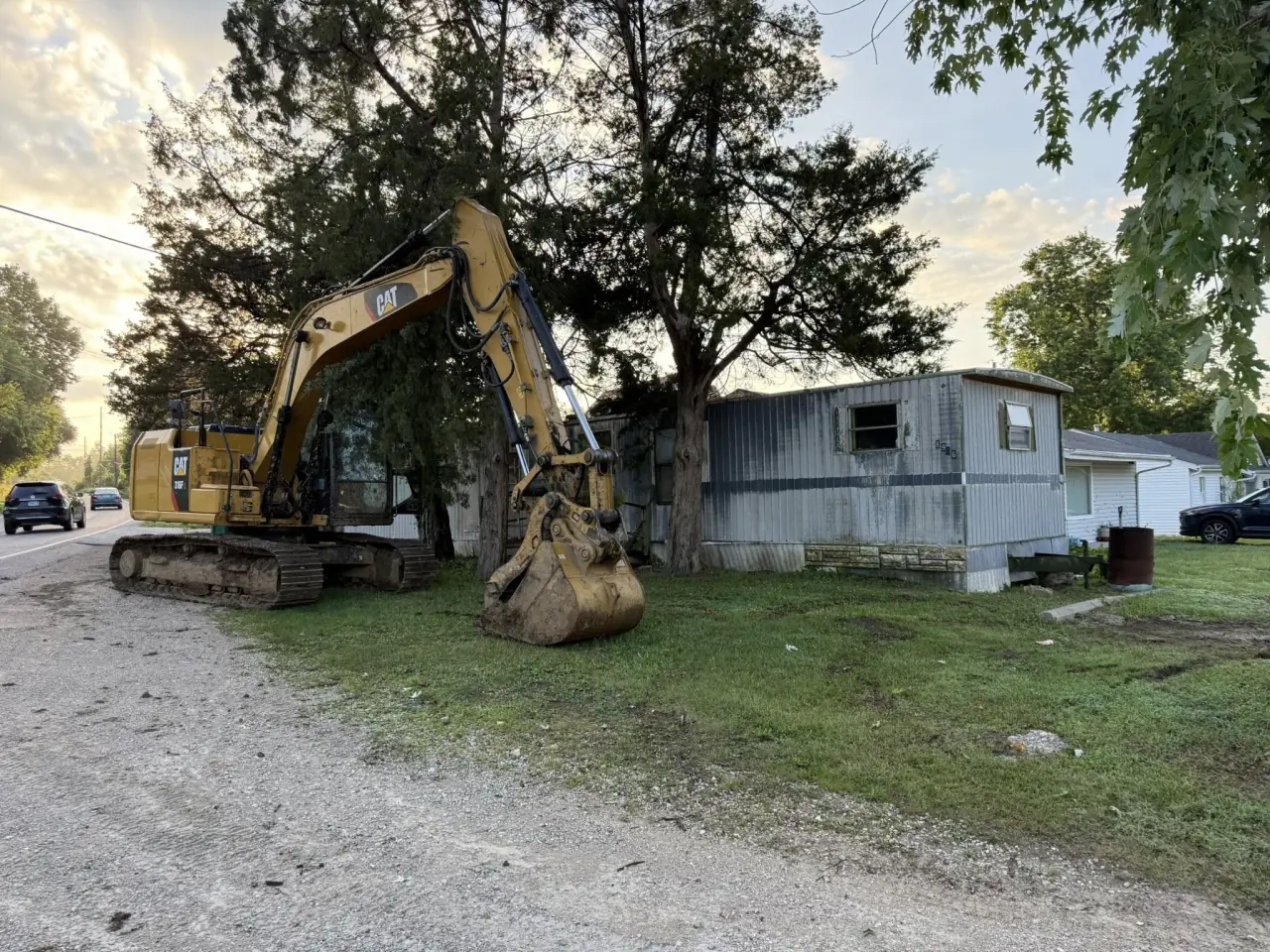
Do I need a demolition permit?
Generally, yes. Jefferson County and its cities typically require a demolition permit, and it is usually issued only after four utilities are confirmed disconnected: gas, electric, water, and sewer. Requirements differ between the unincorporated county and cities like Festus, Crystal City, and Arnold, so check with the office that covers your address.
A contractor who works in Jefferson County regularly should pull the permit for you. The local detail is in our Missouri permit guide. If a contractor is vague about permits, treat that as a warning.
What happens, in order
| Step | What happens |
|---|---|
| 1. Utilities off | The gas company shuts off and disconnects gas at the meter. The electric utility cuts service and removes the line to the house. Water and sewer lines are shut off and capped. |
| 2. Permit | Pulled once the utility sign-offs are in hand. |
| 3. Asbestos check | Older buildings are inspected. Any regulated material is removed by a licensed abatement contractor before demolition. |
| 4. Demolition | The structure comes down: all of it, part of it, or down to the slab. |
| 5. Haul-off | Debris is sorted for recycling and disposal and trucked away. |
| 6. Backfill and grade | The hole is filled and the lot is leveled and left clean. |
Never disconnect a gas line yourself. A contractor who offers to skip the utility step is telling you how they work.
Which kind of demolition do you need?
| Kind | Examples | What to expect |
|---|---|---|
| Full tear-down | House, barn, outbuilding, commercial building | Everything comes out, including slab and footings. Most of the work is the debris. |
| Partial | A wall for an addition, an interior gutted to the studs, an attached garage or porch | Slower. The crew protects what stays and braces anything that carried weight. |
| Site clearing | Old slabs, foundations, driveways, pools, sheds | Overlaps with excavation. A pool removal is as much digging and backfill as demolition. |
Do I need an asbestos check?
For many older buildings, yes. Under federal NESHAP rules, which Missouri runs through its state air program, buildings above a certain size generally need an asbestos inspection before demolition or renovation. It comes up most with homes and commercial buildings built before the 1980s: vinyl floor tile, pipe insulation, siding and old roofing are common sources. It is a standard step, and a good contractor flags it early so it does not stop the job halfway.
Where does the cost go?
Mostly into the debris. A torn-down house becomes tons of material that has to be loaded, hauled and disposed of, and disposal is charged by weight. Sorting it helps: concrete and masonry can be crushed or recycled, and scrap metal goes to a metal yard, which keeps disposal weight down.
The quote also depends on:
- Size and build. Square footage, stories, and wood frame versus brick or concrete.
- The slab. Removing the foundation costs more. Leaving it limits what you can do with the lot.
- Access. Tight lots, close neighbors and poor truck access slow the job.
- Asbestos removal. A separate cost that comes before demolition.
Anyone who quotes a tear-down without walking the site is guessing.
Ask how the debris is handled before you compare prices. J1S hauls its own debris with quad-axle trucks, so haul-off is not a subcontracted line item with a markup. A contractor who rents dumpsters passes the disposal cost on to you.
How do I pick a contractor?
- Licensed, bonded and insured. Demolition puts nearby buildings, utility lines and people at risk.
- Hauls its own debris. Debris is most of the cost.
- Schedules the utility shutoffs with the utilities and the county, instead of handing you a list.
- Leaves the lot graded. Ask what the site looks like when they leave. It should be backfilled, compacted and level, ready to build, seed or sell.
Common questions
Does demolition include debris removal?
With a full-service contractor, yes, and it is most of the job. J1S hauls its own debris with quad-axle trucks and separates concrete, metal and other material for recycling. Always confirm haul-off is included before comparing quotes.
How much does it cost to demolish a house?
There is no flat rate. Cost depends on the size and type of the building, whether the slab comes out, site access, how much debris there is, and whether asbestos removal is needed. Debris is usually the biggest factor. Get a contractor to walk the site for a real number.
Do you do partial or interior demolition?
Yes. J1S removes walls for additions, guts interiors to the studs, takes off attached garages and porches, and clears slabs, foundations, pools and sheds.
Sources
- EPA, Asbestos National Emission Standards for Hazardous Air Pollutants (NESHAP): the federal rule requiring an asbestos inspection before covered demolition and renovation work.
- Missouri Department of Natural Resources, Asbestos: the state air program that administers asbestos rules for demolition in Missouri, with department-certified asbestos contractors.