
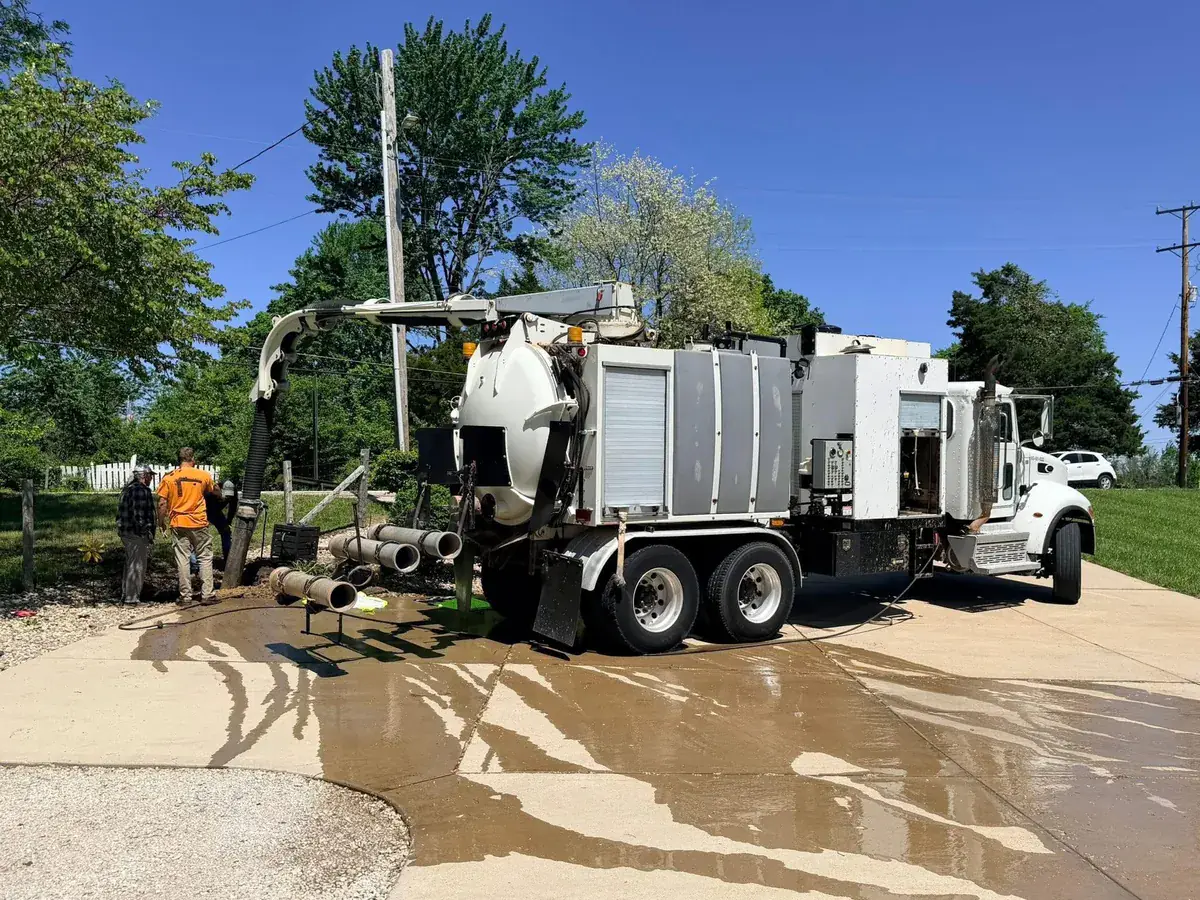
Why Frozen Ground Stops Most Methods
When the ground freezes, the water in the soil pore spaces turns to ice. That ice acts as a binder — it locks soil particles together into a rigid matrix that behaves more like soft rock than dirt. The deeper and longer the freeze, the harder that matrix becomes.
Mechanical excavation runs into this problem immediately. A backhoe bucket is designed to scoop cohesive soil that yields under force. Frozen ground doesn't yield — it shatters or resists. Bucket teeth wear faster, cycle times slow significantly, and on hard frost, a machine may barely penetrate 6 inches before it's effectively chipping rather than digging.
Ripping frozen ground — using a ripper attachment to break it up before excavation — creates a different problem: impact. The force transmitted through the ripper travels through the frozen soil in all directions. Buried utilities don't absorb that impact gracefully. A gas line or water main at 3 feet depth is vulnerable to shockwave damage from ripping operations even if the ripper never physically contacts it.
Hand tools are theoretically viable but practically useless below 4–6 inches of frost in Jefferson County clay. The combination of clay density and ice binder makes hand digging at depth a physically exhausting, slow process that doesn't scale to any real job scope.
How Hydrovac Handles Frozen Ground
Heated hydrovac systems solve the frozen ground problem by attacking the ice directly. The truck's water heating system — a heat exchanger that processes the water supply before it reaches the pump — raises water temperature to 130–160°F at the wand tip. That temperature, combined with operating pressure of 2,000–3,000 PSI, does two things at once: it thaws the ice in the soil matrix and fluidizes the resulting material for vacuum removal.
The important physics here: you're not trying to melt the frozen ground en masse and wait for it to turn to mud. The water thaws a small zone ahead of the wand in real time, and the vacuum removes that material immediately. Thaw and extraction happen simultaneously, at the pace controlled by the operator. The frozen soil immediately adjacent to the cut stays frozen until the wand reaches it.
This means the excavation walls remain stable even in frozen conditions — arguably better than unfrozen clay, which can slough. The frozen soil around the cut holds its shape while the heated water works through the zone being excavated.
Equipment note: Not all hydrovac trucks have water heating systems. This is a meaningful equipment distinction — a unit without a heater cannot effectively penetrate frozen ground, regardless of pressure settings. Before scheduling any winter excavation work, confirm specifically that the contractor's truck is equipped with a water heater rated for the temperatures expected on your job dates. J1S runs trucks equipped for Missouri winter conditions.
Missouri Winters: What You're Actually Working With
Missouri's climate sits in a transitional zone — cold enough for significant ground frost in winter, warm enough to thaw and refreeze multiple times across the same season. The Jefferson County and St. Louis metro area typically see frost depths ranging from a few inches after a brief cold snap to 12–18 inches in a sustained hard winter.
That range sits squarely within the effective operating envelope for heated hydrovac. A unit running 150°F water at 2,500 PSI handles 18 inches of frost without meaningful reduction in overall excavation capability — the initial penetration through the frost layer takes longer than working in thawed soil, but once the wand is below the frost line the operation proceeds normally.
Compare this to a track excavator on the same site. A machine that struggles with 6 inches of frost and effectively stops making useful progress at 12 inches is not a viable option for winter emergency utility work. When a water main breaks in January and the ground is frozen, the job doesn't get rescheduled until spring. It gets done now — and it requires equipment that can actually work in those conditions.
Jefferson County Clay and the Freeze-Thaw Problem
Missouri clay behaves worse than sandy or loamy soil through freeze-thaw cycles, and that has direct implications for utility work.
Clay soils hold moisture more than sandy soils. More moisture in the pore spaces means more ice formation when temperatures drop below freezing — and more expansion. Clay that freezes and thaws repeatedly over a season undergoes significant volume change, and that volume change transmits force to whatever is buried in it.
This is how older water mains in Jefferson County fail in winter: not because temperatures alone are extreme, but because the freeze-thaw cycling in the surrounding clay creates cumulative mechanical stress on the pipe joint or the pipe wall itself. When the failure happens, it happens in frozen or partially frozen ground, and it needs to be accessed immediately.
The same freeze-thaw dynamic that stresses the infrastructure also shifts its position relative to as-built records. Frost heave moves buried utilities — sometimes by inches over the course of several seasons. This is one more reason that utility daylighting before any dig in established Jefferson County infrastructure is a professional standard, not optional belt-and-suspenders caution.
Slurry Behavior in Cold Weather
The excavated material — soil suspended in the heated water used to fluidize it — exits the dig as slurry. In warm weather, that slurry flows readily through the boom and into the debris tank. In cold ambient temperatures, slurry behavior changes.
Cold air thickens the slurry faster as it moves through the boom. In sustained below-freezing temperatures, slurry can begin to set up in the boom if the vacuum system isn't running at adequate flow. Experienced winter hydrovac operators manage this through continuous operation — no long pauses with slurry sitting in the boom — and by monitoring the debris tank temperature to prevent the load from gelling before disposal.
Disposal timing also tightens in winter. Slurry sitting in a full debris tank at 10°F will solidify. J1S manages disposal cycles on winter jobs to avoid that outcome — it's a scheduling and logistics consideration that has to be built into the job plan, not discovered at the end of the day.
Performance Comparison: Cold vs. Normal Operating Conditions
| Condition | Mechanical Excavation | Heated Hydrovac |
|---|---|---|
| Unfrozen ground | Full speed | Full speed |
| 2–6 in frost | Slowed; manageable | Slight reduction; normal operation |
| 6–12 in frost | Significantly slowed; ripping required | 20–30% slower penetration; effective |
| 12–18 in frost | Marginal to impractical | Reduced speed; fully functional |
| Below 0°F ambient | Hydraulic fluid concerns; reduced | Equipment prep required; functional to ~-10°F |
The practical operating envelope for heated hydrovac in Missouri runs down to approximately -10°F with proper equipment preparation. Extended periods below that threshold create equipment concerns — hose flexibility, boom operation, pump performance — that affect safe operation. Missouri rarely sustains temperatures that low for extended periods, so this limit is a technical boundary rather than a practical one for most job planning.
When Heated Hydrovac Is Required vs. Optional
Certain job types don't have a choice. When a gas main has a leak or a water main has failed in January, the repair crew needs access now — not when the ground thaws in March. Emergency utility work in frozen ground is the clearest use case for heated hydrovac, and it's the context where the advantage over mechanical equipment is most stark.
Beyond emergencies, heated hydrovac is the right call for:
- Scheduled utility work that can't be moved to a warmer window — fiber pulls, conduit runs, service lateral replacements with hard schedule constraints
- Utility trenching jobs near marked infrastructure where mechanical ripping would create unacceptable impact risk
- Any winter potholing or daylighting work where utility confirmation is needed before a broader project can proceed
- Municipal and contractor work in Jefferson County where project schedules don't accommodate weather delays
Backfill and Compaction in Winter Conditions
Excavating into frozen ground is one side of the problem. The other side is putting it back together correctly.
Backfilling into a frozen excavation — whether the sidewalls are frozen or the subgrade is frozen — requires mechanical compaction at every lift regardless of backfill material type. Frozen soil does not compact predictably under vibration alone; J1S uses mechanical tamping on all winter backfill. The reason is straightforward: when spring arrives and the frost releases, backfill that wasn't properly compacted in place will settle. Settlement over a utility repair creates a depression in a roadway or yard that has to be corrected — a callback that is entirely preventable.
Material selection matters in winter too. Missouri clay excavated from a frozen site should not be used as compacted structural fill. The moisture content is unpredictable and the material behavior during and after thaw is inconsistent. Select granular backfill — clean crushed stone or coarse sand — is the correct choice for structural applications around utility repairs in winter conditions.
For contractors planning late fall and early winter work: Schedule your utility work earlier in the fall if the site has any schedule flexibility. Once the ground freezes in Jefferson County — typically mid-December through February, with variation — you're adding 20–30% to hydrovac time and managing slurry disposal logistics that don't exist in warm weather. Jobs that begin in October finish faster and cost less than the same scope starting in January. When you don't have that flexibility, heated hydrovac is the answer — but build the extra time into the schedule.