
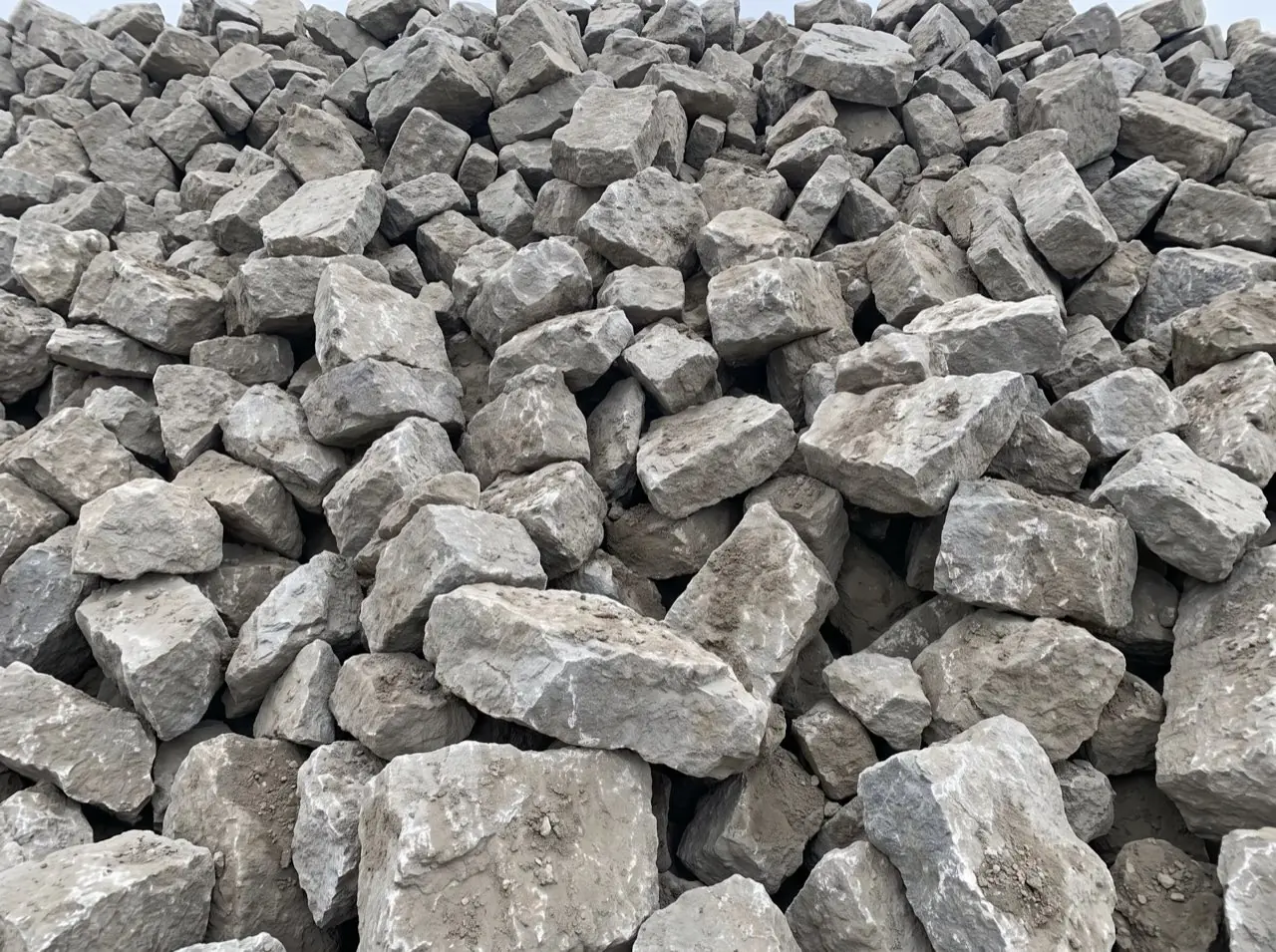
What is rip rap?
Rip rap is large, angular quarried stone, usually limestone, laid in one interlocked layer over filter fabric to keep moving water from washing soil away. It runs from roughly 4 inches up to 24 inches or more, far larger than gravel, and holds by its weight and its broken faces locking together, with no mortar. It is sold by the ton: a 50-foot stream bank done with Class B stone at 18 inches thick takes about 15 to 20 tons.
What size rip rap do I need?
Faster water needs bigger stone. For residential jobs in Jefferson County:
| Class | Stone size | Typical uses |
|---|---|---|
| A | 4 to 8 inches | Roadside ditches, minor slopes, culvert apron edges |
| B | 8 to 14 inches | Moderate stream banks, pond embankments, erosion-prone cuts |
| C and D | 14 inches and up | High-velocity creek channels, primary stream bank armor |
When in doubt on a stream-adjacent job, go one class larger. Undersized rip rap that washes out costs more to replace than oversizing the original installation.
Engineers size rip rap from the expected peak water speed, using d50, the median stone size in the layer. The stone must be angular: rounded river rock of the same size rolls and scatters in the same flow.
Where is rip rap used?
- Creek and stream banks. The most common residential use in Jefferson County, especially on the outside of a bend, where the water runs fastest.
- Drainage ditches. An unlined ditch in clay widens over time. Class A rip rap on the bottom and lower walls holds its shape.
- Culvert outlets. An apron, typically flared and extending 6 to 8 feet downstream, slows the water before it reaches bare soil.
- Pond embankments. Stone along the normal water line stops storm waves from slumping the bank.
- Culvert inlets. Stone around the inlet keeps soil from washing into the pipe.
When is rip rap the wrong choice?
- Thin, even topsoil loss on a gentle hillside. That is a grass problem. Seed with an erosion blanket or hydraulic mulch; it works better and costs much less.
- A bank that has to hold back heavy soil, such as a cut next to a road. Rip rap protects the surface but does not retain anything. That needs a concrete or gabion wall.
- Places where looks matter, such as a front-yard pond. Rip rap looks industrial.
How is rip rap installed?
Two things decide whether it lasts.
Filter fabric goes down first. The fabric lets water through but stops fine soil from washing up between the stones, a failure called piping. Without it, the stone slowly sinks while the surface still looks fine.
Stone goes in one interlocked layer, not a pile. The minimum effective thickness on most residential jobs is 18 inches, measured straight out from the slope. At that scale it is placed by excavator or skid steer, so budget for equipment separately from the stone.
How much rip rap will I need?
Most residential erosion jobs in Jefferson County take 10 to 30 tons, depending on the length of bank or ditch. Larger stone classes cost more per ton. J1S delivers to your site. For the other ways to hold soil on a site, see erosion control in Jefferson County.
Frequently asked questions
Can I use rip rap for a driveway?
No. Rip rap is irregular, does not compact, and is far too large for vehicles. For driveways, use crusher run as a base with #57 stone or surface mix on top.
How long does rip rap last?
Properly installed rip rap on stable soil is essentially permanent; the stone does not rot or wear out. It fails when a flood exceeds the speed it was sized for, or when it was laid without filter fabric.
How is rip rap different from gabion?
Rip rap is loose stone laid on filter fabric. Gabion is stone held in wire mesh baskets or mattresses, used where water is fast enough to move loose stone or a firmer face is needed. Gabion costs more per installed square foot. For most homes in Jefferson County, rip rap is enough and costs much less.
Sources
- Federal Highway Administration, HEC 11: Design of Riprap Revetment: riprap sized by the median stone size, D50, from flow velocity, and angular stone giving the best performance.
- MoDOT Engineering Policy Guide, 611.1 Rock Blanket: geotextile always required under rock blanket, an effective thickness starting at 1.5 feet, and use at culverts and on stream banks.
- MoDOT Engineering Policy Guide, 611.4 Gabions: gabions as wire mesh units filled with stone, used where scour threatens culverts, embankments, and channels.