
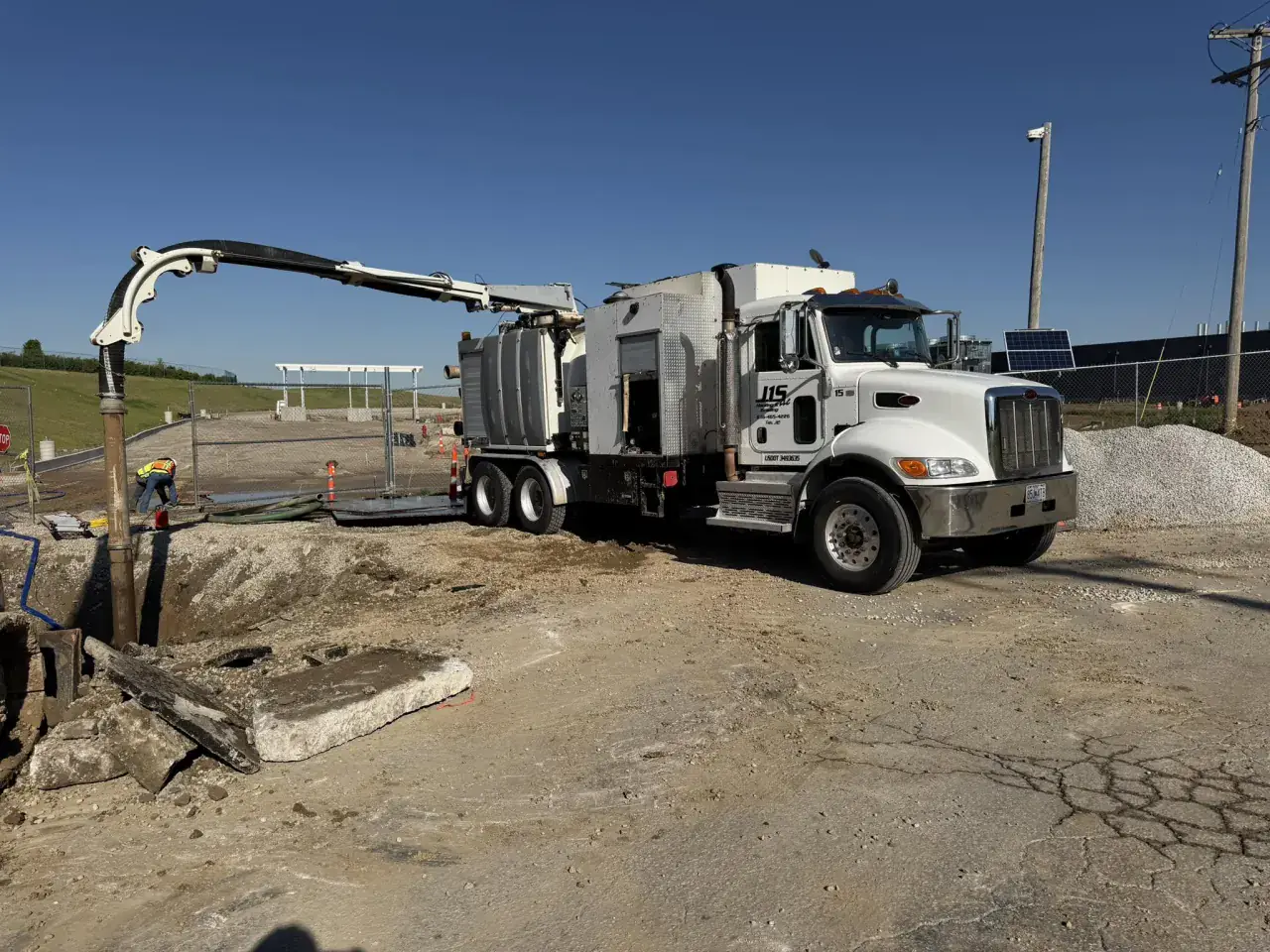
What does hydro excavation cost?
Hydro excavation in Missouri typically costs $250 to $450 per hour, plus a one-time mobilization fee of $150 to $400 to bring the truck to the site. A small residential job, such as four potholes to confirm utility depth, usually totals about $1,100 to $1,400 with disposal included.
What is in a hydrovac quote?
| Item | Typical range | What it covers |
|---|---|---|
| Mobilization fee | $150 to $400 | The truck to and from the site, charged however long the job takes. Lower for Jefferson County jobs from the J1S yard in Festus. |
| Hourly rate | $250 to $450 | Operator time, water, fuel, and equipment |
| Slurry disposal | Included or separate | The soil and water mix must go to a permitted facility. J1S includes it; ask before you sign. |
Where a contractor falls in the hourly range depends on truck size (bigger vacuum trucks cost more), operator certification (NULCA-certified operators carry a premium because they reduce your liability), and whether disposal is in the rate.
Example: four residential potholes
Scope: four potholes, each about 2 feet across and 5 feet deep, to confirm utility depth before a contractor starts trenching.
Mobilization about $200 (local Jefferson County job) + 3 to 4 hours at $300 an hour (about $900 to $1,200) + disposal included = about $1,100 to $1,400.
What raises or lowers the cost?
| Factor | Raises cost | Lowers cost |
|---|---|---|
| Distance | A long drive from the yard | A local contractor |
| Depth | Deeper than 15 feet, where the vacuum works harder | Standard utility depth, 4 to 12 feet |
| Soil | Dense compacted fill or shale | Clay and loose soil, which water cuts quickly |
| Moves | Repositioning the truck between spots | Digging from one spot without moving |
| Season | Winter, since heating water burns more fuel | |
| Access | Tight access, with the boom at full reach | |
| Disposal | Billed separately at the end | Included in the quote |
Is it worth more than a backhoe?
Near buried lines, usually. A backhoe hitting an unmarked gas main runs $25,000 to $150,000 in repair costs at minimum, before project delays, regulatory fines, and contractor liability. Hydrovac removes soil around a utility under control, though damage is still possible if locating, verification, technique, or equipment settings are off. For utility-adjacent work, compare total project cost, not the hourly rate.
How to get a quote from J1S
We quote same-day for most Jefferson County jobs. Send:
- The address and site access notes
- Approximate depth and scope: number of potholes, length of slot trench, or linear footage
- Your target start date
- What you expect is buried nearby (we will verify with 811)
Our quotes include mobilization, operator time, and disposal, with no separate line items at the end. The hydrovac quote checklist helps you compare quotes on what is included, not just the rate. For background, see the hydroexcavation service page, hydrovac vs. traditional excavation, and NULCA certification.
Common questions
What is a hydrovac mobilization fee?
It covers driving the hydrovac truck to and from your job site. It is charged separately from the hourly rate, however long the job takes, and typically runs $150 to $400. A local contractor costs less: a Festus-based crew has lower mobilization for Jefferson County jobs than one coming from St. Louis.
Does hydrovac cost more than a backhoe?
Per hour, yes. Near buried lines, compare total project cost instead, including the risk of a utility strike. A gas main strike can cost $25,000 to $150,000 in repairs alone, which often makes hydrovac the cheaper choice for utility work.
Sources
- Missouri Revised Statutes, Section 319.026: an excavator must notify the notification center (Missouri 811) at least two working days before starting to excavate.
- OSHA, 29 CFR 1926.651, Specific Excavation Requirements: the location of underground utilities must be determined before an excavation is opened, and their exact location found by safe and acceptable means as digging approaches them.